
Stories That Stay
Episode 5 - Rain Pryor
Subscribe Wherever You Get Your Podcasts
About Our Guest
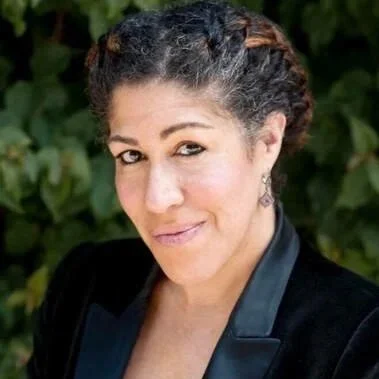
Rain Pryor
Rain Pryor is an award-winning actress, singer, writer, director, author, speaker, and political activist. She is the daughter of legendary, iconic comedian Richard Pryor—one of the most influential, groundbreaking figures in American entertainment and comedy history—and Jewish astronomer and activist Shelley Bonus.
Rain has established a distinguished career across television, film, and theater, starring in projects such as Head of the Class, Showtime’s Rude Awakening, Spenser: For Hire, and Brewster's Millions. She is also an acclaimed playwright, known for her award-winning solo show Fried Chicken and Latkes and her NYC stage show Pass the Matza, which explores her unique identity as a Black Jewish woman navigating two distinct cultural worlds.
About Our Hosts


About the Podcast
Shamm Petros, Senior Director of Learning & Development at Lion’s Story, brings training grounded in the organization’s 35+ years of racial literacy research and a story-forward approach to racial healing.
Dwight Dunston, a mindfulness practitioner and storyteller, provides the emotional grounding and reflective prompts that model racial stress processing through the body.
Stories that Stay explores how stories of identity shape us. Hosted by Shamm Petros and Dwight Dunston, the podcast is a project of Lion’s Story, where healing happens at the intersection of art, science, and storytelling.
Lion’s Story helps people build real courage, practical language, and skills to navigate discomfort with clarity and compassion — starting with themselves.
Full Episode Transcript
When Untruth Makes You Shake: Rain Pryor on Identity and Resilience
Chapter 1: Introduction & Welcome
Timestamps: 00:00 – 02:00
00:00 - Shamm Petros: Welcome to Stories That Stay, how stories of identity shape us. This is a podcast where healing happens at the intersection of art, science, and storytelling. I'm Shamm Petros, a therapist, learning strategist, refugee, and budding creative.
00:17 - Dwight Dunston: And I'm Dwight Dunstan, a writer, musician, theater maker, and conflict tender. Stories That Stay Podcast is a project of Lion Story. In this episode, our guest, Rain Pryor, will share with us her own personal experiences, and Sham and I will share practical tools and reflective questions to help you, our listeners, and Rain navigate identity and difference with more clarity and less fear. So whether you're an educator, organizer, artist, or someone simply trying to make sense of what you've been feeling in the world around you, you're in the right place.
00:59 - Shamm Petros: And in our second season, we continue to explore stories of resilience, rupture, and repair, guided by people who have found language for their truths. We always warn our guests and our listeners that it will get emotional, but for us, that is the point. Emotions are your superpower.
01:15 - Dwight Dunston: Our guest is already here in the studio. Welcome, Rain.
01:20 - Rain Pryor: Thank you. Glad to be here.
01:22 - Dwight Dunston: My goodness.
01:22 - Shamm Petros: All right.
01:24 - Dwight Dunston: So so great to have you with us today. Thank you for being here.
01:28 - Rain Pryor: Glad to be here.
01:30 - Shamm Petros: Got us all smiling. And to honor this moment and the stories that Rain is about to share, we will take some breaths together. This will help us all prepare for the feelings, emotions, and truths that will emerge. For you listening, wherever you are—walking, driving, resting, cooking, getting ready for the day—I invite you to take a few breaths just for yourself as we share an audio brief. And remember, keep breathing, especially throughout the episode.
Chapter 2: Guest Bio & Pass the Matza
Timestamps: 02:00 – 04:44
02:00 - Dwight Dunston: Rain Pryor, you are what I call a quadruple threat. Singer, actor, writer, director. Like come on now. There's so much that you bring to the creative practice. And knowing that you know our executive director, Lisa, who also feels like this quadruple—
02:17 - Rain Pryor: Yes, she is, yes.
02:20 - Dwight Dunston: My goodness.
02:21 - Dwight Dunston: I can't imagine y'all two in the same space just popping off.
02:25 - Shamm Petros: It and yes, you star in the film Spencer's, Brewster Millions, Christmas on BAT, co-starred into 2026 on The Neighborhood. And help me out here, the film Douen
02:37 - Rain Pryor: Douen. Mm-hmm.
02:38 - Shamm Petros: Douen. Thank you. And you won awards and receive accolades for your outstanding acting and writing.
02:46 - Dwight Dunston: I'm curious if there's anything else you want to add here at the top of our time from your bio before we jump into the conversation today, anything about—
02:57 - Rain Pryor: I have a play that I wrote that is gonna be having a showcase, equity showcase, small production in New York City this year. So that's really exciting and a testament to keeping it moving in a creative world.
03:14 - Dwight Dunston: Goodness, yes, congratulations. What's the play called?
03:18 - Rain Pryor: Pass the Matza, and it's based on my solo show Fried Chicken and Latkas where a Black Jewish girl decides to invite her Black father and grandmother to Passover dinner at her Jewish and white grandparents' house.
03:32 - Shamm Petros: Okay. I'm ready.
03:34 - Dwight Dunston: Wow. And that sounds rich. Especially as we begin begin this storytelling. I'm like, right. Woo. Rich, rich.
03:42 - Shamm Petros: And while our conversation today is focused on a primary question, we have an opening and closing question we'd like to ask all our guests. So at the top of our time together, I want to ask of you, on a scale of one to ten, how stressed do you feel about sharing your story today? One being not at all, ten being very stressed.
04:04 - Rain Pryor: Say maybe a four because when you're in anticipation, you know, I think that adds to stress a little, but it's not negative. I think sometimes my stress and excitement go hand in hand, if that makes sense.
04:19 - Shamm Petros: Yes, the actual definition of stress also includes excitement, right? So thank you. You are at a four. And we'll ask you the same question at the end of your story sharing today. Thank you for sharing. We're so honored to guide and listen and be present in the conversation today. And I'm gonna pass it over to my dear friend and co-host Dwight to take us through the next part of our conversation.
Chapter 3: Earliest Memories of Race & Difference
Timestamps: 04:44 – 07:39
04:44 - Dwight Dunston: Beautiful. And our listeners, I'm sure you are well aware of the question we ask and we prepped you, Rain, for this question. So wanna just ask you this question and then pass the microphone to you, Rain. But wondering if you can share what the earliest memories of race or difference of any kind that you recall.
05:06 - Rain Pryor: The earliest awareness of race and difference. It's funny because this is the stuff I write about and I create. So I would say the earliest difference for me is five years old running down the street on Cannon Drive in Beverly Hills being chased by a kid calling me the N-word and hiding in bushes. And then after that we had crosses burned on our front lawn. So those are my earliest memories of race.
05:31 - Dwight Dunston: Mm.
05:31 - Shamm Petros: Think we all give a pause here, listeners and everyone in the studio with us today, as to receive what you just share.
05:39 - Dwight Dunston: Yeah, it's deep to talk to artists and notice what they bring because that was so pithy, right? You're like, this is what I write about. This is what I make art about. What we're going to do here with that story is be with it in a particular kind of way just to be able to give it more breadth and allow you to add some more context and details if you wish. And just really holding, right? So just to slow it down. Just the remembering, the retelling, curious if you can share what are the emotions when you think about this early memory, and if you can, on a scale from one to ten, calculate the intensity of the emotions. So one's being like, I feel this emotion like a tiny bit, ten being like when I retell this story or when I remember these early memories, that feeling that I have is enormous, all consuming. It moves through every fiber of my body. Just share with us some of the feelings and calculate them.
06:36 - Rain Pryor: It's so interesting that you ask about the feelings because when I was done just saying that little bit, my eyes watered up. Not as necessarily because I was so sad, but I think in the presence of what we're living in right now, I'm really affected by what I see, what I hear, what I feel, I feel sometimes exhaustion from having to explain my story or trying to be heard and navigating the times that we're in creatively because of race and religion or perspective. So I'm feeling all the feelings. Like I said it's not really sadness, but I think there's—I wish I didn't have to have gone through that in order to share my story. Yeah, it comes with so much. Like I don't even know, like it's a lot. That's all I'm saying. It's a lot. And holding space for that. It's a lot sometimes. You know.
07:30 - Dwight Dunston: It's a lot. It's a lot. And one of the words I heard you name, one of the feelings is exhaustion. Just curious if you wanted to start there. If you wanted to scale exhaustion. One being minuscule, ten being, I'm exhausted, overwhelmingly exhausted.
Chapter 4: Physicalizing Emotion & Trauma
Timestamps: 07:52 – 15:24
07:52 - Rain Pryor: I'm overwhelmingly exhausted. It's about a ten. It didn't feel that way for a very long time. It has felt that way in the last three years. It's at a level now where I take rest to—and to breathe and to step away from and step out of also the reason again why I say I create what I create. You know.
08:21 - Dwight Dunston: So that exhaustion out of 10. And maybe also because it's at a 10, maybe we just take a moment to just breathe into that exhaustion. Take a breath in and out. Curious if you notice any other feelings
08:33 - Rain Pryor: There's resentment.
08:36 - Dwight Dunston: Say more about it and scale it for us, one to ten.
08:39 - Rain Pryor: Yes, I will say resentment for feeling that this version of story is not done. And that would be a seven, eight, depending on the day, right now. Yeah. You know, there's resentment for what would it be like, resentment for I had to go through that and still in many ways go through that. Resentment for the structures in place, systemic racism, systemic things that I can't control that I wish I could control, so yeah.
09:16 - Dwight Dunston: Mm. For our listeners and for you, Rain, I'm gonna walk you through this process and then we'll have some more space for you to just be with all the things. So you mentioned the exhaustion at a ten, that resentment at a seven or eight. I'm curious about locating these feelings physically, if it's available. Do they show up anywhere physiologically? Do you notice anything about the body?
09:37 - Rain Pryor: Yes I do.
09:39 - Dwight Dunston: Like your eyes. I'm curious if there's other ways you know these feelings are alive for you.
09:44 - Rain Pryor: They happen in my chest, my chest gets tight. It happens in my stomach. Will get kind of naughty or I feel shaky. So I'm one of those if, and I'm sure there's a listener or yourselves that can relate. When things are untrue, I shake. It's a visceral response I have to untruth. When it's truthful, it more gets planted whether it's in my stomach or my chest tightens. So those are the ways for me, or like leaky eyes, you know, like you wonder like, why is this affecting me this way? You know? That's how it presents itself. I could say in an even a deeper way, I feel that I'm a survivor of breast cancer and I believe those feelings contributed to that. An inflammation in my body I feel is part of the feelings I carry in the world, and that's why I really try my best—not, and I hate the word try, I do—practice self-care, a lot of self-care and work on myself so that I can release a lot of that as much as possible. And then I feel that shift in my body. I feel more energized, sometimes even more creative.
11:04 - Dwight Dunston: How generous you were bringing Sham and I and our listeners into the physical experience, right? The noticing the eyes watering, that happened as soon as you started sharing, right? But the chest being tight, the stomach being knotty, the shakiness, and this really resonated with me when you said when things are untrue, I shake. I didn't know that's what was happening in those moments when I'm in the midst of untruth. But that language, right, I shake when there's untruth. Yeah, the ways that you've made this connection being a survivor of breast cancer and how these feelings live in the body, right? And the practices you've taken up to make sure you move these things through physically, you know, the physical sensation of these feelings, right? The stress, and we'll come back to that as well, but so powerful, Rain. So powerful. The next question is about, and you already have started to bring us into it, when being with an early memory of race or difference, we invite folks to share any self-talk, so any things you remember saying to yourself from the early memory or any things in the retelling that you're saying to yourself. Even brought us into some of that, right, you're resentful that this story is not over yet. This is not over. You know, that might be a thing you're also saying to yourself as you're processing. Any other self-talk or images coming to mind?
12:30 - Rain Pryor: The self-talk that I do, I mean never really happened as a young person. I didn't know. I wasn't taught that. So you know, other than you know, be Black and proud. As an adult, 57 years old, what I do when those old type of feelings, even if they integrate with the new perspective on the world, what I do is remind myself that that situation to me is not happening now. That it's a past experience that I went through, and I tell that little girl that I love her and that it's okay, and that this version of myself at 57 can take care of her and can love her through that and it's okay. That's how I do to navigate and to self-talk the good vibes. I'm beautiful, I'm strong, I'm talented, I'm courageous, I'm resilient, I'm powerful, I'm truthful. Yeah.
13:34 - Dwight Dunston: Yeah, powerful. There's this whole other level of work that, you know, Sham was my trainer learning this skill and Dr. Stevenson was Sham's trainer, and you're really modeling this. We talk a lot about redoes, right? And what would we say to our maybe younger selves in these moments of stress, and you know it's so obvious of the work. The heart work, the spiritual work, the somatic work that you've taken up to be with these experiences. Like one of the other self-talk things that we sort of captured was this "I wish I didn't have to go through that to share my story," right, was like one thing you mentioned. And you know this as an artist, these stories have now become your art, your creativity, right? And so that's part of the catharsis, that's part of the healing, the transmuting and this thing you get to say to yourself, right? "I love this beautiful Black little girl. You know, I got you, I got your back, I'm here ." So powerful. Yeah. Any other images or self-talk before we take another breath together and I invite Sham to just share some thoughts?
14:42 - Rain Pryor: Not that I can think of off the top right now.
14:45 - Dwight Dunston: So you shared so much, Rain, and I want to invite you and our listeners to do another intentional breath here. We'll breathe in for a four count and then breathe out for six. And then we'll invite Sham in just for some more reflection. So let's take a breath in and out. Let me do that one more time. Breath in. Thank you, Rain, for that storytelling and just bringing us, letting us walk with you for a little bit. And Sham, come on in.
Chapter 5: Processing, Research, & Affirmation
Timestamps: 15:24 – 20:55
15:24 - Shamm Petros: Just seeing the brilliance of your not only survival but creation expression. What we just took you through is a mindfulness strategy we call this CLCBE. C is calculate all your emotions on a scale of one to ten. L is locate it in your body, and you did that with such great efficiency. That was particularly tough for some folks, but not only were you able to identify your chest and stomach, but exactly what was going on, right? The tightness, the naughtiness, the self-talk, your very coach, proclaim, program self-talk that you had to give yourself over the years, which is incredible because some of us have already natural self-talk that is messaging from others, media, and maybe a voice that is not their own, right? And your self-talk and this brilliance is taking care of that most vulnerable part of you. It is offering protection, right, and hope that this version of you is prepared and able to care. Brilliance. You know, we find that some people's self-talk is really centered around maybe even protecting the offender, right, or diluting the impact of the experience so they can survive that moment. And I know what stands in front of us today in the studio, it's decades of hard work internally.
16:47 - Rain Pryor: Yeah. I just wanna be transparent: I also am in trauma therapy to work through all this stuff. You have to apply it. Like, I can't just talk about it, I have to be willing to apply it if I want to change and feel internally powerful.
17:05 - Shamm Petros: And the right therapy I always tell people expands time too, you know? It's like time travel in a way, especially when we're talking about trauma. You know, we've trained thousands of people. We've interviewed several people. I get excited by patterns. There's certain professions that are resistant. Some of them surprisingly are mental health professionals, right, former leaders, and even in some way or another, professional storytellers, whether you're an executive or professor or journalist, right? You may be adequate at telling a story, but to field it, gain authorship, make meaning out of it, reauthor it is a completely different skill set. And I can't help but assume that your artistry gives you those skills as well.
17:56 - Rain Pryor: My artistry and my spirituality practice does as well.
17:58 - Shamm Petros: Mm, spirituality. Yes. Absolutely. I can deeply relate to that as well. I'm not sure if this is intuitive or something hard learned and studied, but when your intuition—I heard intuition speaking to how holding stress, especially around identity and race, impacted your breast cancer diagnosis and experience. I wanna read to you, I'm not sure if you know about this study. It was done by the American Journal of Epidemiology in 2007 by several authors, but led by Dr. Taylor Williams. It studied how racism is potentially tied to breast cancer in Black women.
18:38 - Rain Pryor: Wow, that is mind-blowing to me.
18:45 - Shamm Petros: Yeah. And I'll share the article. It was very comprehensive. They studied over 59,000 African-American women for six years and found those that have reported higher incidence of racial discrimination had a higher risk of breast cancer diagnosis, especially those under the age of 50. And there's so many times, you know, our intuition is accurate, but the world has not yet affirmed it, right, the journals, the doctors, whomever maybe, although we are the experts in our own lives. And there's several other studies, but this one's particularly salient to what you brought up today. And I just wanted to make sure you also had this affirmation for yourself.
19:25 - Rain Pryor: Thank you. I received that.
19:26 - Shamm Petros: Yeah, I just wanna validate those personal truths and truths that have also now been researched and supported. That it does. Yeah, if you're up to reading that journal entry, invite you to do so. I can send it to you. It is profound and we use that a lot in our work. Cause, sometimes to confirm people's cognitions before we're given permission to enter work emotionally with folks. Where, you know, our work is emotion first. That is the data we need. It is critical data about what we need and what the world needs. And how we survive it is usually intersection of our brilliance and what was available to us.
20:08 - Rain Pryor: Understood.
20:09 - Shamm Petros: I wanna affirm that for you and for our listeners. Just remember how proud I am of you. I can't wait to see your play and read your work. It is profound.
20:21 - Rain Pryor: I'll say thank you. Received.
20:23 - Shamm Petros: Thank you. Providing a model for our listeners, you know. After sharing your story now and using CLCBE—calculate your emotions and scale them, locate it in your body, communicate self-talk, communicate any imageries, breathe, and extra long intentional exhale. I like to do BE CLC BE BE because that breath is a gift. But I do want to ask you, Rain, after sharing your story, how stressed do you feel? One to ten.
Chapter 6: Recalibration, Titling, & Closing
Timestamps: 20:55 – 25:15
20:55 - Rain Pryor: Maybe three, two, three? I feel good.
20:58 - Dwight Dunston: It went down a little bit.
20:59 - Rain Pryor: You know.
20:59 - Dwight Dunston: You started at four, went down a little bit.
21:01 - Rain Pryor: Yeah. I think for myself, anytime I get to share in a very authentic way, it removes stress, it removes anxiety, it removes tension, you know, my shoulders go down a little. I can feel that, you know, "you're in the right place" feeling. I like that. And then again, that also is what then ends up igniting my creativity and how I'm gonna go about the rest of my day. So yeah. Thanks.
21:35 - Shamm Petros: Yes. Beautiful. That's always my goal. You know, oftentimes we're teaching people how to identify their stress, describe it in detail, use different interventions and strategies to recalibrate, right? And then get into their imagination. It's the hardest thing. We use stories to allow adults to play. Dwight alluded to it, but like if you could reimagine that moment, how it would be restructured, who would be there for you, what would have been said. Imagination, I think, is so key. It's not just about healing, but it's also living a life worth living.
22:11 - Rain Pryor: Absolutely.
22:12 - Shamm Petros: A gift to be in conversation with you, Rain, and a gift for our listeners. A gift, an honor.
22:18 - Rain Pryor: Thank you.
22:18 - Shamm Petros: Last question we'll ask, if you want to give this experience, this memory, this story a title, what would it be?
22:26 - Rain Pryor: Peeling away the layers of the onion.
22:28 - Shamm Petros: Peeling away the layers of the onion
22:31 - Dwight Dunston: Wow. Beautiful. Mm-hmm. I love that title.
22:34 - Rain Pryor: Ha ha ha.
22:37 - Dwight Dunston: Thank you. And for our listeners, as we close, we invite you to take a few closing breaths with us together. And while we're taking them together, these are just for you as you transition away from this conversation, from hearing Rain's courageous storytelling, as you close down this podcast and turn to what your day holds next. We just want to invite you to slow down, take a few breaths, notice if there are things swirling around, feelings, emotions, sensations, just to bring some attention to your body, to your experience as a way to honor wherever you are, however you are in this moment. So let me take a few moments to take some breaths.
23:23 - Shamm Petros: Just wanna cosign and amplify listeners, guests, just start noticing today your body, your thoughts, your emotions. Try hard not to then categorize these noticings or correct for them. Noticing how you are moved and shaped by stories. Cause we should be moved and shaped by stories, like each other's stories. And I want to thank all of our listeners so much for tuning in to Stories That Stay. Stories of Identity Shape Us. This podcast is a project of Lion Story. To learn about Lion Story in our trainings and workshops and resources, please visit thelionstory.org, and that is thelionstory.org. So two S's there. This episode of Stories That Stay was produced and edited by Peterson Toscano. And music during our mindful moment comes from Dwight Dunstan himself. Other music we use comes from epidemicsound.com. And you can always find the show notes and transcripts of these episodes on storiesthatstay.net or just heading to our website at thelionstory.org and finding the dedicated place for our podcast. Thank you again for joining us. We're here to help you build the real courage, practical language and skills to navigate discomfort or stress and trauma with clarity and compassion for yourself. If you found value in today's episode or any of our episodes the last two seasons, please share them with someone who needs it. May that be a friend or even a colleague. And if you haven't done so yet, I do invite you to review and subscribe to Stories That Stay. We are grateful, eternally, for your support. You help this community grow. Your support turns our research into practical tools and trainings and offerings for the people, particularly for the people who need them the most.
25:15 - Dwight Dunston: So until next time, keep listening, keep learning, and keep telling your story. And remember, you are your most important listener.
Learn More & Resources
Visit Lion’s Story to explore our mission, training programs, and upcoming events like the
Resilience Literacy Institute.
Stories That Stay is a project ofLion’s Story, a nonprofit dedicated to building racial literacy through storytelling, mindfulness, and healing.
Rooted in over 35 years of research by Dr. Howard C. Stevenson at the University of Pennsylvania, our work guides individuals and institutions to reclaim their stories, reduce identity-based stress, and step into authentic inclusion—not as a checklist, but as a way of being.
Produced and edited byPeterson Toscano.
Mindful moment music byDwight Dunston.
Music byEpidemic Sound.
Podcast site: storiesthatstay.net
Hosts: Shamm Petros and Dwight Dunston
Learn more about Lion’s Story:https://www.thelionsstory.org
Explore Lion’s Story services and trainings:https://www.thelionsstory.org/services
Learn more about CLCBE and racial literacy:https://www.gse.upenn.edu/news/using-clcbe-framework-challenging-discussions
Learn more about Hip Hop Headphones: A Scholar’s Critical Playlist:https://www.bloomsbury.com/us/hip-hop-headphones-9781501308260/