
Stories That Stay
Episode 5 - Jeremy Keys
Subscribe Wherever You Get Your Podcasts
About Our Guest
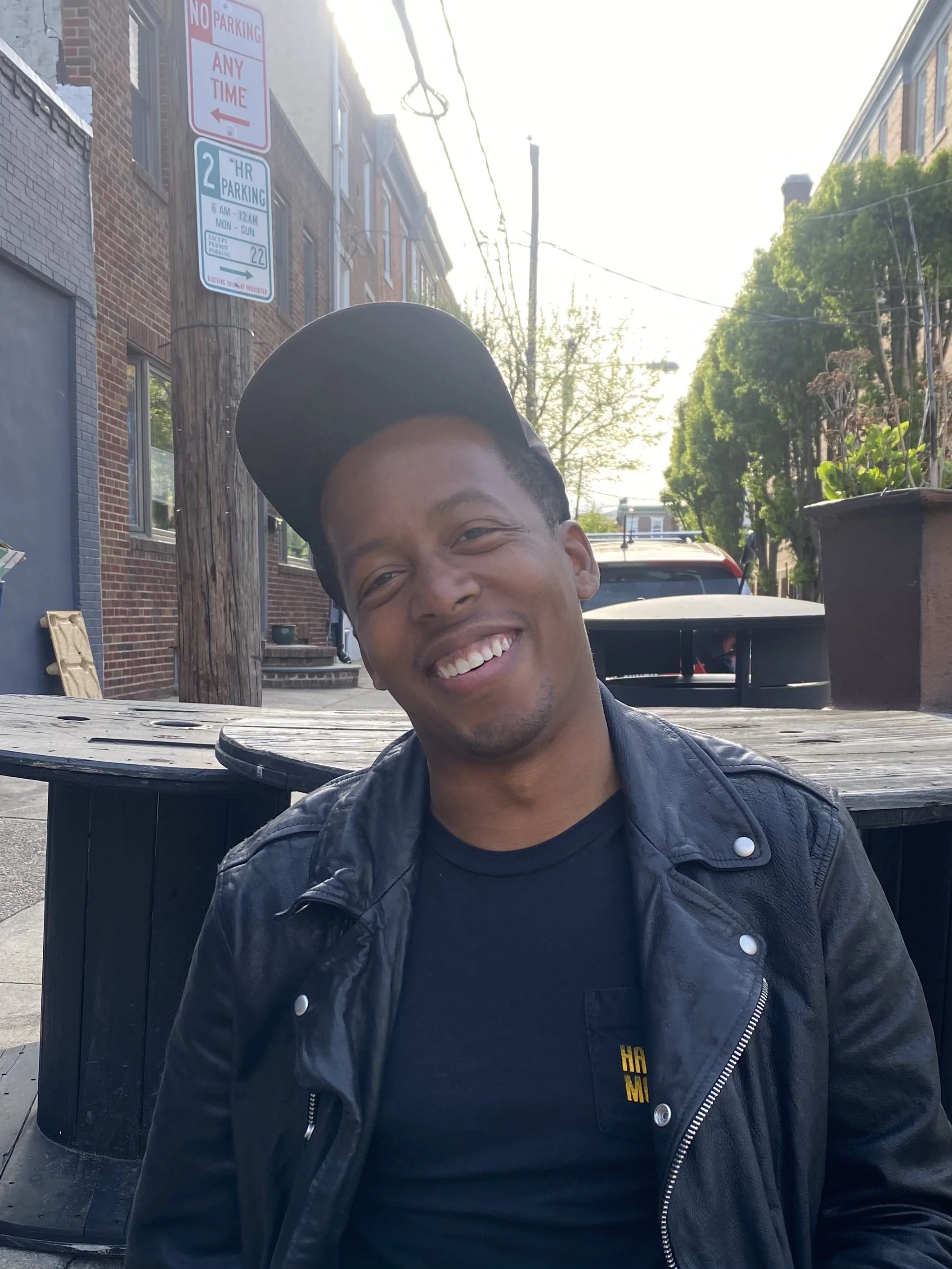
Jeremy Keys
Jeremy Keys is a social media strategist, writer, and musician based in Philadelphia. He was the lead singer and MC for the Philly hip-hop band Hardwork Movement and continues to create and release solo music. A deeply passionate Philadelphia Eagles fan, Jeremy also writes and runs the dedicated newsletter Birds of a Feather.
About Our Hosts


About the Podcast
Shamm Petros, Senior Director of Learning & Development at Lion’s Story, brings training grounded in the organization’s 35+ years of racial literacy research and a story-forward approach to racial healing.
Dwight Dunston, a mindfulness practitioner and storyteller, provides the emotional grounding and reflective prompts that model racial stress processing through the body.
Stories that Stay explores how stories of identity shape us. Hosted by Shamm Petros and Dwight Dunston, the podcast is a project of Lion’s Story, where healing happens at the intersection of art, science, and storytelling.
Lion’s Story helps people build real courage, practical language, and skills to navigate discomfort with clarity and compassion — starting with themselves.
Full Episode Transcript
This podcast focuses on helping people navigate identity and difference through storytelling
Jeremy Keys: In the moment, that shame that I had for how my family was constructed or how people in this community might perceive me changed into shame of why did I treat my parents like that?
Shamm Petros: Welcome to Stories that Stay. This is a podcast where healing happens at the intersection of art, science, and storytelling. I'm Shamm Petros, a therapist, learning strategist, refugee, and shy creative.
Dwight Dunston: And I'm Dwight Dunston, a writer, musician, theater maker, and conflict tender.
Shamm Petros: This podcast is a project of Lion Story.
Dwight Dunston: In this episode, our guest, Jeremy Keys, will share with us his own personal experiences. And Sham and I will share practical tools and, uh, reflective questions to help you, our listeners, and Jeremy navigate identity and difference with more clarity and less fear.
Shamm Petros: We always warn our guests and our listeners that it will get emotional, but for us, that is the whole point.
Dwight Dunston: Jeremy Keys is already here in the studio with us. What's up, Jeremy?
Jeremy Keys: Yo, what's up, what's up, what's up?
Dwight Dunston: What's up, man?
Jeremy Keys: Happy to be here.
Dwight Dunston: So great to have you with us today.
Shamm Petros: It is. It's really great. We already got some laughs in before we hit the record button, so we're all feeling present.
Jeremy Keys: Yes. I'm honored. I'm, um, stoked to meet you, Shaun. I feel like we're already best friends.
Shamm Petros: Yes.
Jeremy Keys: Can't wait to move to Harlem and hang out. Dwight, my guy, known you for a very long time. Excited to talk to you more.
Shamm Petros: Amazing.
Dwight Dunston: Amazing. This is the last day we'll ever talk this podcast. This is it. This is it.
Jeremy Keys: This is it. We had a really good run.
Dwight Dunston: We had a good 20 years, baby. 20 years.
Shamm Petros: We decided to dig deeper. Yeah. Listen, now you're gonna have a new way of talking to you, I promise. I wanna just invite us to honor this moment and the stories that you'll share, to, uh, take a few breaths together. This will help us prepare for the feelings, emotions, memories, truths, laughs, all. Whatever emerges. So for our listeners, wherever you are, walking, driving, resting, cleaning, cooking, I invite you to take a few breaths here. And I will give us, let's say 30 seconds. We'll provide an audio reprieve. Maybe one more. Open our eyes, maybe wiggle our fingers, awaken our presence. Feel the back of our seat. Listeners, thank you for trusting us with a few breaths.
Dwight Dunston: Hmm. Thank you, Shyam. Jeremy, um, you are a man of many talents, so it was hard to bog down your bio. You made it hard. But I know a few of the things that I wanted to presence is that you are a social media strategist. You have used your skills and various tools and techniques to tell authentic stories.
Shamm Petros: And I also hear, Jeremy, you are an avid Philly sports fan. I don't think I've ever met anyone from Philly that's not an avid sportsman.
Jeremy Keys: Right. It's a gift and a curse. It's a gift and a curse.
Shamm Petros: Listen. Yes. And it has inspired you to start your blog, Birds of a Feather.
Jeremy Keys: I started this Eagles, uh, newsletter last year. You know, I always be texting people about the Eagles, so I'm like, let me just get it out there instead of blowing up Dwight's phone.
Shamm Petros: When I was living in Philly, one of the earliest survival tips I got was to just randomly say, go, birds, wherever I go.
Jeremy Keys: Yeah, yeah, 100%. Works every time.
Shamm Petros: And the. The green is my favorite color ever. So I was like, I was able, you know?
Jeremy Keys: All right. I feel like everybody looks good in Kelly Green. You know, I'm saying yes.
Shamm Petros: And actually, line story, got a chance to spend some time with the Eagles.
Jeremy Keys: Oh, really?
Shamm Petros: Yeah. We were able to do a mindfulness storytelling workshop with them. Um, I believe in 2021, like the whole team.
Jeremy Keys: Nice. That's really dope.
Shamm Petros: That was really, really dope.
Jeremy Keys: I was looking for another kind of creative hobby to have because I already have too many. So I'm like, let's add more on top. I've always been obsessed with football in a crazy way. In college, Dwight, our friend Shawn would come and try and hang out. I'd be like, guys, I gotta, I gotta stay back. You know, Uh, I would watch the combine on tv. So, yes, let me just write about the Eagles because I'm super passionate about it and it's been fun. It's been a lot of fun.
Dwight Dunston: Wow. Um, yeah. You are one of the most passionate Eagles fans that I know. He's been out there. Every time they've won, he's been outside. I, uh, pray for keys on those days.
Jeremy Keys: My God got lost in the streets.
Dwight Dunston: You know, you guys celebrate, and I'm not going to hide the ball from our listeners. You and I know each other very well from going to college together. But then as creatives, we have made art together. You're one of my favorite musicians, singers, MCs. We've toured the country together. You were the lead singer and one of the main emcees in the hip hop band Philly, Hip hop band, Hard work Movement. You've also been creating solo work, you know, since our hard work days as well. So, yeah, just an incredible artist, musician, creative, and once again, there's so many other things that we could share. But I'm curious if there's anything else you want to add about your bio here at the top of our time Keys.
Jeremy Keys: You're making me blush. It was so nice. I mean, Dwight and I have a very deep friendship. We've been friends since we were teenagers. When I, you know, first went to college and met Dwight, we immediately connected. And I think I'm, uh, just gonna blow up your spot. Dwight is also probably the most creative person I've ever met my entire life. Very, very kind, very, very funny, very special person. We've always had this deep, creative connection, too, on top of just a, uh, friendship and being able to make each other laugh. We've written songs in his mom's living room and recorded. I've done comedy bits on road trips that we've done in improv shows. He's one of my favorite. One of my favorite people on earth. So I'm gonna take additional time for my bio to just talk about how Dwight is absolutely amazing.
Shamm Petros: I love it.
Jeremy Keys: And Shyam, I've known you for, I want to say, 20 minutes, and you are also already one of my favorite people.
Shamm Petros: I love it. Listen, I hear Dwight in you. I told him that before we got started.
Jeremy Keys: You know, we spent countless hours.
Dwight Dunston: We shaped each other's affect and personality. 100%. 100%.
Shamm Petros: Uh, we can chair the fan club together, Jeremy.
Jeremy Keys: Yes, exactly.
Shamm Petros: Thank you so much. Jeremy, we have a preamble question for you before we get to our core question today. And we always ask this of our guests at the top of our time together to share a bit about how they're feeling about sharing their story. In our practice, in our use of mindfulness skills, we do a lot of quantifying. It helps us just see our emotions on a scale. I want to ask you at this moment, on a scale of from 1 to 10, stress, are you feeling about sharing your story today? 1 being not stressed at all. 10 being very stressed.
Jeremy Keys: Yeah, maybe like a, uh, 2. It's very comfortable environment because you two are very great. And because of friends like Dwight and people in my life, I have grown to become very comfortable with sharing stories from my past or my childhood or not being guarded about things. So this feels like a continuation of that process. Yeah, maybe two.
Shamm Petros: Okay. Thank you, too. Thank you for sharing.
Jeremy Keys: Yeah.
Shamm Petros: At this point, we're going to get into it. Maybe an opportunity to take another breath here if you want, for you and our listeners, maybe a little shoulder shake, neck stretch, whatever you need. You're familiar with Our prompt. And we want to pose to you, what is the earliest memory of a difference that you recall?
Dwight Dunston: Mm, mhm.
Jeremy Keys: This is a powerful question. I had to think about it. So When I was 8 years old, my mom got married to my stepdad, who's an incredible person, absolutely incredible person. But it was sort of this merging of two families because my stepdad had three sons and they're all white and my family is all black. Right. I was the youngest, so everybody was teenagers too. Weird time to bring together a lot of teenagers. But on top of that, we like, moved somewhere else. Right. So they met in South Jersey. We moved to the suburbs of Philadelphia. And I suddenly found myself growing up in this very white kind of affluent community. I met like, a lot of like, my closest friends that I still talk to to this day. From that time is Dwight knows I'm like, really close with a lot of friends from high school.
But it was also like, very challenging. There was a lot of difficulty reconciling wanting to be a part of this community and wanting to fit in and like, assimilate in like, a lot of ways, which is already naturally difficult when you're a person of color in a mostly like, kind of white community. But then also it's at the time where I'm an adolescent becoming a teenager, I'm having a lot of questions about my own identity too. And I'm feeling this tension around, like, how my family is constructed too. Right.
Because sometimes, especially when you're like a kid and you're talking to other kids, people want things to fit in, like, one box, something that they can like, easily understand. And I was still trying to understand my family and understand my place in this community. So trying to like, fit in in a lot of white spaces and be seen in a good light by certain people. And because of that, I felt like I was very guarded about my family. Only a few of my closest friends would meet my parents. I had this feeling of shame in some moments, of bringing people around. I had a lot of that through middle school and through high school.
And I have this, like, very specific memory that I still think about from time to time. I had like, this big group of friends. We were all gonna, like, meet up ahead of, uh, a homecoming dance or something like that. My parents were like, really excited to like, come and like, hang out with people. And I remember pretty much telling them, we're not getting together anymore, like, it's not gonna happen, just because I was embarrassed of having my parents be in this space. Even though some of My friends had already met them. It was just like this preconceived idea that I had, some of which was based off of, like. I remember there was a moment where I was on the soccer team in ninth grade, and some kids would lightly make fun of the fact that my family was a little bit different.
You know, a lot of things that happen when you're young and kids will kind of look fun like that. So for me, it was having this fear in my mind. And then there were these moments that would, like, reinforce how people would think about me. And when you're 16, that's all that I cared about. You know, how am I being perceived? Am I cool? Do people like me? I remember basically, my parents found out that there actually was something going on, and I went and did it without them. And they were pretty bummed about that. In the moment, I didn't really think about it that much because I was so focused on myself.
But as the years went by and as they continue to go by, I think about that moment all the time because I really love my parents. They sacrificed so much for me. My mom found somebody that she loves who, like, took care of me and my siblings and still is such a key figure in our lives. In the moment, that shame that I had for how my family was constructed or how people in this community might perceive me changed into shame of why did I treat my parents like that? When you asked the question, that's the first thing that came up. I was like, man, I think about that all the time because it's so wrapped up in a lot of questions of identity that I had at the time.
Shamm Petros: Jeremy, thank you for sharing.
Jeremy Keys: Yeah, uh, of course, of course.
Shamm Petros: We treat stories like art and science here. We want to give you some skills so you can maybe hold that memory in a different way, maybe suggest it, see it in some context. I'm going to ask you some questions about that memory. And you're such a wonderful storyteller in which you've already kind of dictated some of the questions we're going to ask. Maybe it's just really giving you some consciousness around the skills you're already using. But when our first prompt is calculate... Uh, we told you we like to work on scales here. And I want to know if you can name all the feelings you're having about this memory and scale them from 1 to 10.
Jeremy Keys: I think embarrassment, for sure, I feel like, is a. Is a key part of it that's always central to this. For me, that's nine. It's hard to sometimes Let go of the past when it comes to things like this. And m. Like wishing you could have done something differently. Cause it's a moment that feels so close, but it's so far away. There's also a level. This is gonna sound strange, but, like, relief. There's a time where I would think about this, and I would. My body shake at that deep shame. It's like it makes your heart really heavy. The older that I've gotten, I feel relieved that I'm able to revisit that and hold a bunch of truths at the same time without feeling that deep shame and pain that comes with it. So there's a little bit of that.
Shamm Petros: What present is that for you?
Jeremy Keys: I would say it's like five. I would say it's a part of it. And then love for my parents is like a 10 for sure.
Shamm Petros: Beautiful.
Jeremy Keys: I know they've gone through a lot. They've had their own challenges, but they also helped raise a house of like, seven kids. That's crazy. Have you been in a house with seven kids? Those bathrooms are disgusting. Everybody's always eating my leftovers that I left in the fridge. You know, eat my pop Tarts. Let's send this podcast directly to my brother because I got, you know, I got beef that I gotta resolve.
Shamm Petros: Listen, I. I highly recommend that. Love at a 10, embarrassment at a 9, relief at a 5. You mentioned in your storytelling as you were sharing the memory shame a couple of times, there's two versions of it, how you treated your parents. But also earlier on, I think around trying to see where you belong in this new setting with this new family structure. So is that present for you, Shane?
Jeremy Keys: Yeah. Yeah. I think it's. I think more so from the way that I treated my parents. For sure.
Shamm Petros: Okay.
Jeremy Keys: I would say it used to be more present than it is now because I think that I'm older. Young. Jeremy was tripping. You know, there was a period in life where I was wearing a shark tooth necklace. You can't trust that guy.
Shamm Petros: You just call it braces. Really is the one.
Jeremy Keys: Right? You know, yeah.
Dwight Dunston: This kid.
Jeremy Keys: So I'm able to kind of hold that a little bit. So. Yeah.
Shamm Petros: Where is it for you, 1 to 10, even in your acknowledgement, it's variations over time, which is a wonderful skill to be able to do that.
Jeremy Keys: Yeah. I think it's also at like a five. It's definitely still makes my heart heavy a little bit.
Dwight Dunston: Okay.
Jeremy Keys: It's definitely like a part of the story, but it's not as debilitating as it Once was, I'd say, okay, our...
Shamm Petros: Uh, next question's really around... How do you physically feel these emotions? How have you embodied them? Do these emotions. Embarrassment out of nine, shame out of five, relief at a five, love at a ten. Do you feel them anywhere in your body or in your movement as you share the memory today?
Jeremy Keys: Yeah, a lot of it is, like, in my chest. Whenever I feel this deep embarrassment or this shame, it feels like my heart is sinking. It's like my breath gets short. That's the feeling that I felt when I lied to my parents and told them about this dance thing wasn't happening. But I think that was the cause of that. Might have been different. And now when I recount it in years after, when I think about it, I get the same feeling for sure. But I feel like the love also kind of feels like the same space. And that's why I'm able to not have as much of a visceral reaction as I have in the past. But, yeah, a lot of it is in my chest. I'm also getting older. It's like every time I'm stressed, my back, you know, foot pain, I'm like, what is going on?
Shamm Petros: I didn't know certain parts of my body existed. It's not, uh, for aches and pain sometimes, like, uh, what is that?
Dwight Dunston: Right?
Shamm Petros: Yo, for real embarrassment in the chest, but also love is present there for you. And I think it's so wonderful that you've experienced these feelings, necessarily wonderful. And you're able to illustrate them, especially across time and in this moment. And juxtaposition to one another is, uh, a great skill.
Shamm Petros: And I'm going to ask her our next question. In reflecting on this memory, do you hear any self talk?
Jeremy Keys: Yeah. When I mentioned how the hard part about it is it feels so close, but it was a long time ago or feels far away at the same time. That self talk that I had at the moment is still apart. It's still there in some ways. I can still hearken back. You guys got me using a word like hearken. What is going on? I still know exactly what that self talk was at that moment. You know, I could still, like, call back on it and hear it, and it's something that, like, still exists. There's still a part of me that wants to belong and be accepted by people and be liked by people. But I feel like it's changed a little bit. And when you're a, uh, teenager, at least how I was, it was so dominating, you know? Yeah. The reason it's Dimmed a little bit is because of, honestly, Dwight and meeting friends who loved me for me and accepted me for who I was and made me feel good and helped me, you know, grow. And so I think that's kind of what dimmed a little bit.
Shamm Petros: I caused some self talk. I wrote down what you said. Am I cool? How am I being received? Where do I belong? Where am I at home? Mm. So that question's still present, Right. But now you have answers or, uh, you can see yourself. You, uh, know you've been in community. And oftentimes some of those questions we asked ourselves, am I cool? Am I belong? I feel like we can interpret them as our desires. We remove shame from the conversations like you desire to be more. That feels like home in a context where so much was shifting and changing. And I want to give credit to little Jeremy. Right. Everything you're sharing is so developmentally appropriate, you know?
Dwight Dunston: Yeah, for sure.
Jeremy Keys: Except for the shark tooth.
Shamm Petros: I even think that wearing the shark...
Dwight Dunston: tooth, listening to Matchbox 20. It's all part of the. It's the 90s, early 2000s.
Shamm Petros: Even the context in which you thought you were the center of the world, everything was through your perception or people looking at you. How are they perceiving you? You're right where you need it to be. I'm so happy that you are in a loving and caring family, especially throughout that. And you were very illustrative in your description. But are there any images that come to you when you think about this memory, when you reflect on it? The images?
Jeremy Keys: Yeah, I mean, I remember going to the pre, uh, meetup before this dance. I think we met up at this girl's house and we were all taking pictures outside and the sun was going down. And I, yeah, I, ah, remember it all. Very, very Viv. Everybody's parents are there but mine. People are asking me where they are. I'm like, oh, I couldn't make it. The look on my parents faces too. They found out that was one of the first times that I made them sad. That's also something that sticks with you when you grow up and you start to realize that your parents are just like people. I've made my parents mad before and I've made them upset or frustrated, but that's the first time that I think I genuinely hurt their feelings. And I'm like, yo, that was kind of crazy to experience. Like, shook the shark tooth off me, you know, I was like, this is wild, you know? Yeah, I definitely still remember that.
Shamm Petros: Yeah, I think a lot of us have that memory, right? Like oh no, this is different than anger, this is different than irritation could impact them in this way. And uh, you shared a couple of times throughout our time together today how these stories, these memories seem so close. I really think that is both the science and art of storytelling, right? And especially when we take the time to extrapolate the data as we did just now. For me, storytelling is like time travel, much like music and art. It could take you to places that feel far away at one point. But once you start invoking the image, the self talk, the characters in your narrative, it's as if it just happened. And that's particularly true for stressful memories. What we did with you just now, Jeremy, is a method we call dlcbe.
Jeremy Keys: Mhm.
Shamm Petros: The be is always just an emphasis on breathing, which we're gonna take a second to do. I wanna give back to you too. CL is calculate all your emotions on a scale of 1 to 10. That just gives us more context. Cause in many ways people share about these memories and say, well I was embarrassed, I had some shame, I had some grief. But it's so important to know where they lie in relationship to one another. Relief at a 5, love at a 10. And where that lands in your body, in your movement. And for you, both of the embarrassment and the love was in your chest. And examining and observing our self talk, sometimes that's pretty difficult for certain people. But you got right into it. Like the voice, the messaging in your head then and even the iteration of it now. And images, images could take us so far and bring it so close. And I was watching your face and taking notice of just your expressions as you were reflecting on the photo scene, your parents faces.
Shamm Petros: This is an exercise really meant to give you more data and that you are your own researcher. This is like me search. We regard stories with uh, great respect. We just don't share for the sake of sharing. We hope that when we share, we do it in a way that is conducive to not just reflection, but noticing the details, being able to regulate also your emotion and the memory, just having more ownership of that memory for you. And uh, we always give this practice, hopefully as a gift, as a skill, as a true practice. So I promise um, you the next time you tell this story, I don't know if you'll call up your parents or a sibling. We ask that you even see LCBE again. The data will be different every single time. I encourage you to share this episode with family members, see how it was remembered, take perspective.
Shamm Petros: And we don't have time to do this today, but in our greater practice, the next prompt we ask folks, is if you could do over this memory, what would you do differently? That's, uh, no place at all to feel shame or judgment or like, what could I have done better? But, uh, in that prompt, we asked you for your imagination to really explore what you needed, what you wish happened. Maybe you know, the Eagles players like speaking to you in that memory. Be like, where are your parents? Why did he caught him here?
Dwight Dunston: You know, Dante Cunningham just asked you where.
Shamm Petros: Thank you. Because I don't know any player.
Shamm Petros: Thank you.
Shamm Petros: So gift, you know, skills for you and for any story you. You tell yourself over and over again because, you know, you did share that you've reflected on this memory quite frequently throughout the year.
Dwight Dunston: Want to just thank you KE for your sharing. We've never talked about this story in quite this way. We often quote a, uh, Nayira Wahid poem. Some people, when they hear your stories contract, others upon hearing it expand. And this is how, you know, I just felt myself expand, uh, into your story. Cause I remember going to a predominantly white school, right. And having my black parents come on to campus and events and feeling that whatever that was embarrassed or shamed, they were dipped. You know, all these things are getting dropped off in the minivan and other people are playing pulling up in the Audi and the Porsche. So hearing your story. Yeah. Allowed me to just be in touch with my own feelings of that shame and embarrassment, but also to love, because my parents sacrificed so much. You know, I know your parents wanted to give you and your siblings the world. I love your parents. Hearing your story is just like helping me love my own family. No matter the context we were in.
Shamm Petros: before you shared your story, you felt stress at it, too. And now afterwards, where does that rest for you? One to ten, maybe?
Jeremy Keys: Like, um, one, the one, or Is there a zero?
Shamm Petros: Yeah. Is there a zero?
Dwight Dunston: It could be a zero. It could be whatever you want.
Jeremy Keys: Whatever you want. No, it's nice to talk about it. I haven't talked about it in a while, but it's nice to talk about it. Yeah. It's nice to also connect, Dwight, and also talk about those feelings and that experience. So zero point, maybe 0.5.
Shamm Petros: Okay.
Jeremy Keys: For doing, for actions.
Shamm Petros: If you could give this story a title or even a hashtag to our social media strategist over here.
Jeremy Keys: Yes.
Shamm Petros: What would it be?
Jeremy Keys: Wow. Hashtag, this is long. Hashtag, take your parents to the dance. Also hashtag, don't wear a shark tooth. Hashtag don't listen to so much. Ja rule.
Dwight Dunston: Ah, hashtag. What would Dante Cunningham say? Hey, Jeremy, where your parents at?
Jeremy Keys: M man.
Dwight Dunston: Hey, buddy.
Jeremy Keys: Hey, my brother. Not now, Dante.
Dwight Dunston: All right, no problem, Jeremy. Right, right, right.
Shamm Petros: Wonderful, wonderful. Thank you so much, Jeremy, for sharing this one with us and our listeners.
Dwight Dunston: Yes, yes, yes. Thank you.
Jeremy Keys: You know, it's great to be here. It's great to talk to you guys. Thank you guys for having me. This is incredible.
Dwight Dunston: So grateful, Keezy, for your courageous storytelling, your vulnerability, your generosity. And, uh, for our listeners, we just want to invite you because as Jeremy shared his story, you might have had your own memories, your own experience come to mind. We want to just invite you to take a few closing breaths together. Just for you, no one else, as you begin to transition away from this podcast and turn to what your day holds. Next, one more breath in and out.
Shamm Petros: Uh, thank you so much for tuning into Stories How Stories of Identity Shape Us. This podcast is a project of Lion Story. Learn more about Lion Story, uh, our training workshops and our resources. Please visit thelinestory.org this episode of Stories that Stay was produced and edited by Peterson Toscano. Music during our mindful moment comes from Dwight Dunstan himself. Other music comes from epidemicsound.com and, uh, to see the show notes and transcripts of the episode, please visit storiestay.net storiestay.net thank you again for joining us. We're here to help you build the real courage and the practical skills and language to navigate discomfort, but more clarity and compassion, starting with yourself. If you found value in today's episode, please share this with someone who needs it. If you haven't done so yet, I invite you to review and subscribe to Stories that stays. We are grateful for your support. Your support turns our research into into practical tools and trainings for people who need them. Lion Stories Resilience Literacy Institute is August 11-14
Dwight Dunston: Um, so until next time, keep listening, keep learning and keep telling your story. And remember, you are your most important listener.
Shamm Petros: If you are a leader, educator, clinician, artist, or someone who simply wants to navigate difficult conversations with more confidence, confidence and compassion, we'd love to invite you to Lion Stories Resilience Literacy institute happening virtually August 11th through 14th from 12 to 3pm Eastern. Together, we'll explore practical skills in mindfulness, emotional regulation, storytelling and resilience so you can respond to identity based stress with greater courage, clarity and care. Thanks to support for from the American Psychological Association, a limited number of partial scholarships are available especially for BIPOC professionals. Registration is open now and scholarship applications close July 17th. Please visit LionStory.org to learn more. We hope to see you there.
Learn More & Resources
Visit Lion’s Story to explore our mission, training programs, and upcoming events like the
Resilience Literacy Institute.
Stories That Stay is a project ofLion’s Story, a nonprofit dedicated to building racial literacy through storytelling, mindfulness, and healing.
Rooted in over 35 years of research by Dr. Howard C. Stevenson at the University of Pennsylvania, our work guides individuals and institutions to reclaim their stories, reduce identity-based stress, and step into authentic inclusion—not as a checklist, but as a way of being.
Produced and edited byPeterson Toscano.
Mindful moment music byDwight Dunston.
Music byEpidemic Sound.
Podcast site: storiesthatstay.net
Hosts: Shamm Petros and Dwight Dunston
Learn more about Lion’s Story:https://www.thelionsstory.org
Explore Lion’s Story services and trainings:https://www.thelionsstory.org/services
Learn more about CLCBE and racial literacy:https://www.gse.upenn.edu/news/using-clcbe-framework-challenging-discussions
Learn more about Hip Hop Headphones: A Scholar’s Critical Playlist:https://www.bloomsbury.com/us/hip-hop-headphones-9781501308260/