
Stories That Stay
Episode 4 - Dr. Maureen Flemming
Subscribe Wherever You Get Your Podcasts
About Our Guest
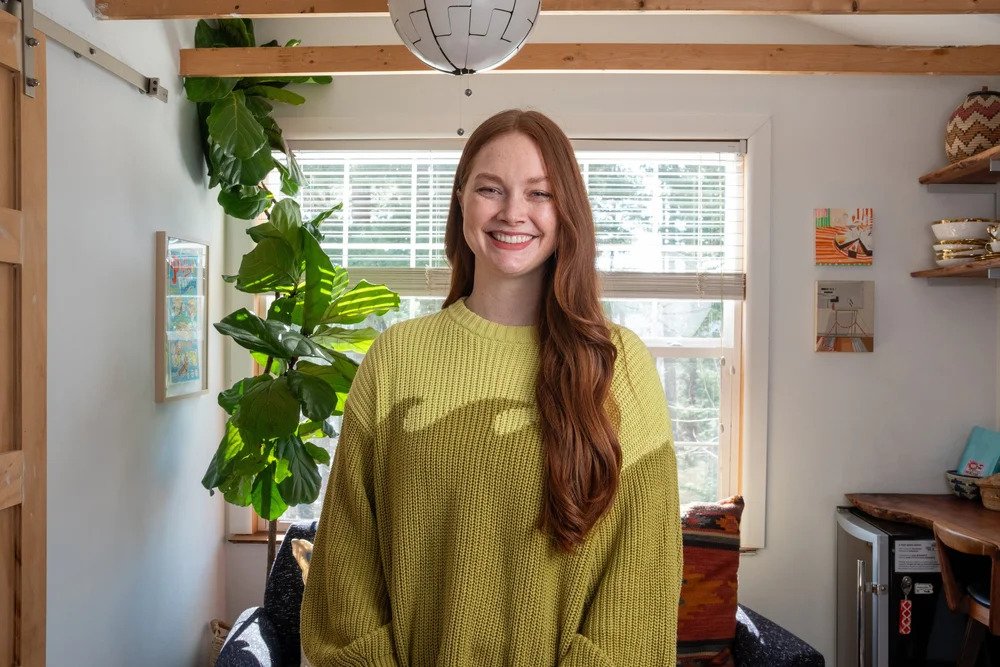
Dr. Maureen Fleming
Dr. Maureen Fleming is a licensed counseling psychologist whose work focuses on intersectionality, social justice, and somatic-based healing. She identifies as a White, cisgender woman with an acquired disability and has spent the majority of her life in and around Philadelphia. She received a master’s degree in counseling from the University of Pennsylvania and earned her Ph.D. in Counseling Psychology from the University of Oregon, concentrating her research on racial and identity-based stress processing.
Over the last decade, Maureen has provided mental health services in schools, universities, private practice, and community-based clinics. She is also a part-time faculty member at Penn GSE and a long-time trainer and researcher with Lion’s Story.
About Our Hosts


About the Podcast
Shamm Petros, Senior Director of Learning & Development at Lion’s Story, brings training grounded in the organization’s 35+ years of racial literacy research and a story-forward approach to racial healing.
Dwight Dunston, a mindfulness practitioner and storyteller, provides the emotional grounding and reflective prompts that model racial stress processing through the body.
Stories that Stay explores how stories of identity shape us. Hosted by Shamm Petros and Dwight Dunston, the podcast is a project of Lion’s Story, where healing happens at the intersection of art, science, and storytelling.
Lion’s Story helps people build real courage, practical language, and skills to navigate discomfort with clarity and compassion — starting with themselves.
Full Episode Transcript
S2E4 Dr. Maureen Fleming “When Doing Everything Right Is Not Enough”
[00:00] Dr. Maureen Fleming: I feel like I’m still so much in the midst of my disability story. Even a couple months ago we talked about writing our own stories, and I was like, how do you write a story that’s not over yet?
[00:15] Shamm Petros: Welcome to Stories That Stay: How Stories of Identity Shape Us. This is a podcast where healing happens at the intersection of art, science, and storytelling. I’m Shamm Petros.
[00:23] Dwight Dunston: And I’m Dwight Dunston. Stories That Stay is a project of Lion’s Story.
[00:29] Shamm Petros: In our second season, we continue to explore stories of resilience, rupture, and repair. We always warn our guests that it will get emotional, but for us, that’s the point.
[00:40] Dwight Dunston: Our guest today, Dr. Maureen Fleming, is already in the studio. What’s up, Maureen?
[00:45] Shamm Petros: Hey, Maureen. Happy you’re here.
[00:47] Dr. Maureen Fleming: Hi, everyone.
[00:48] Dwight Dunston: Oh my God. So great to have you here with us today.
[00:52] Dr. Maureen Fleming: So excited to be here.
[00:54] Shamm Petros: And to honor this moment and the stories that Dr. Fleming is about to share, we’ll take some breaths together at this point. This will help all of us prepare for the feelings, for the emotions, and for the truth that will emerge in our conversation today. For you listening, whether you’re sitting, walking, cleaning, or cooking, I invite you to also take a few deep breaths, just wherever you are in this moment, whatever is best for you. And we’ll give you a little music as you’re doing this.
[01:23] [Music]: Mindful moment.
[01:28] Shamm Petros: And we’re joined today by someone whose work is really at the front lines of how we heal, not just as individuals, but as community. Dr. Maureen Fleming, so good to have you in the studio with us today, Maureen.
[01:41] Dwight Dunston: You sent over your bio. You have had quite the journey. As Shamm shared, y’all have known each other for a while. You did your master’s at Penn. You’re born and raised here in Philly, the Philly area. You went out to Oregon to get your Ph.D. And this whole journey that you’ve been on has really supported you to lean into the study of identity-based stress. You spent the last decade taking all of your schooling, your learnings, and doing the real-world work in schools, at community clinics, and as a Lion’s Story trainer, which is where we met.
[02:21] Shamm Petros: And what I love is our journey. We met as classmates, what, seven or eight years now? I can’t remember. You’ve birthed a Ph.D. in that timeline, so yeah, that’s pretty accurate. And I remember, I tell you this all the time, when I saw how you took notes, I was like, wow, I like her brain. That’s always been a baseline of our mutual respect and partnership and friendship and work.
[02:48] Shamm Petros: It was an honor to really have you here, and particularly inviting you into this space to share and talk and explore what your lived experience has been as a white woman, as a cisgender woman with an acquired disability, and how you bring that into the room with such grace and balance: every room, the research room, the therapy room, the teaching room. It’s that focus on intersectionality, that somatic, body-based healing, that makes your approach and your perspective so unique. So thank you for sharing that with us, however you feel able and willing to share with us today.
[03:25] Dr. Maureen Fleming: Thank you both for having me here.
[03:28] Dwight Dunston: Our listeners are getting ready to hear from you, Maureen. And if you’re listening right now and you’re the kind of person who tends to keep everything inside, someone who over-regulates or suppresses emotion, please pay close attention to what Dr. Fleming is going to share today. And know that she’s actually in the process of launching a private practice.
[03:49] Dwight Dunston: So Maureen, we said a lot of your bio. Is there anything you want to add, anything you want to throw in there that we’ve forgotten that you want to make sure to presence with our guest?
[03:59] Dr. Maureen Fleming: No, I don’t think so. We talked a little bit before recording, but I have two tiny dogs. One of them is my assistant here with me today. He’ll be supervising this session. They’re a big part of my healing and regulation. And yeah, just stop and pet a pup today.
[04:17] Dwight Dunston: Beautiful.
[04:19] Shamm Petros: I love it. Thank you, Maureen. We want to ask you very lightly, you’re familiar with this question, but how are you arriving today? And more specifically, maybe asking on a scale of 1 to 10, how are you feeling about sharing your story today, with 1 being the least stressed and 10 being very stressed?
[04:39] Dr. Maureen Fleming: I guess I would say around a 6. Cognitively, I don’t feel too stressed. I’m really happy to be here with you both. You both make me feel really comfortable. But I feel the anxiety in my body of just before a talk or performance, like, oh gosh, okay, it’s happening. So I’m more anxious than I think I want to admit.
[05:03] Shamm Petros: So stress is at a 6.
[05:05] Dr. Maureen Fleming: Yeah, 6 feels accurate.
[05:08] Shamm Petros: Okay. And more anxious than you want to admit. I love your ability to identify that. Thank you, Maureen. I’m going to pass it on to my dear friend and our co-host, Dwight, to take us through the next part of our time together today.
[05:23] Dwight Dunston: For folks just joining us here for our second season, we always have the same prompt for our guest. Maureen, I’m going to ask you that prompt, and then the floor is yours. What are some of the earliest memories of difference that you recall?
[05:39] Dr. Maureen Fleming: I first want to give a quick shout-out to season one, especially Merrill’s story. I heard a lot of things that resonated with my story and her story around body size and having family in the city, living in the suburbs. I’ll touch a little bit on that.
[05:55] Dr. Maureen Fleming: But also, as somebody who’s done so much work around race and talked so much about race, I want to have a really good first racial story. And I have lots of racial stories. But when we think about our first stories of difference, as I think a lot of white folks can understand and have felt kind of similar stress when we’ve asked them to tell their first story about race, it can be hard as a white person to remember: what was the first moment you realized you were white, or that there were racial differences?
[06:26] Dr. Maureen Fleming: And so, trying to be true to the prompt, I have a quick story that I’ll share, and then I’ll share some more information after about what that meant on a broader scale.
[06:36] Dr. Maureen Fleming: I was born in South Philly. My whole family has been in South Philly since they immigrated from different areas of Europe: England, Ireland, Poland. I spent the first three and a half years in South Philly, and then my parents and I moved to a South Jersey suburb called Washington Township. I don’t have a ton of memories. I was pretty young before I moved to New Jersey, but I have a couple that really stand out.
[07:02] Dr. Maureen Fleming: When I think about what made me notice that I was different from other people or that others were different from me, this is the one that came to mind. Right before I moved to New Jersey, I remember sitting on my stoop with one of my little friends. We were playing, and she brought over this new Barbie she wanted to show me. She starts unwrapping the Barbie and is just throwing the trash on the sidewalk. I was looking at her aghast, like, what are you doing? And she’s like, I’m showing you my Barbie. What’s the problem?
[07:38] Dr. Maureen Fleming: And I felt anger surge up into me, and I screamed, “That’s littering! You’re a litterbug!” I’m three and a half.
[07:46] Dr. Maureen Fleming: She’s like, what do you mean, littering? What is littering? What are you talking about? And I’m like, come on, pick up your trash. I see you guys laughing, too. It makes me laugh.
[07:58] Shamm Petros: A litterbug. I love it.
[08:00] Dwight Dunston: Wow. Yeah, I’m cracking up at little Maureen.
[08:04] Dr. Maureen Fleming: This has happened to me multiple times, even as an adult, where the rage rises and I’m like, litterbug. And then I’m like, Maureen, calm down. But it was my first sense of injustice, of: you don’t do that.
[08:20] Dr. Maureen Fleming: When I told my mom about it, like, can you believe she littered, her common saying was, “Well, hon, she must not have been raised right.” She’s South Philly born and bred. I’ll try to do her accent at some point if it comes out.
[08:37] Dr. Maureen Fleming: And so I’m like, okay, so there are people who are raised right. They learn what’s right or wrong. They learn how to act right. And then there are people who aren’t. This saying that we joke about a lot, my mom had this golden rule: good girls get nice things, fresh girls get nothing.
[09:00] Dr. Maureen Fleming: So I quickly learned that being a good girl meant you followed the rules. You treated others like you’d like to be treated. And for the most part, pretty good lessons. Usually if you treat people with kindness, they treat you kindly back. If you do what you’re supposed to do, things generally work out.
[09:21] Dr. Maureen Fleming: It reminded me of when Merrill was telling her story, where my family members were all in the city and I was in the suburbs. I don’t think it was racial because I had people of different races at my school, and there were people of different races in my family’s neighborhood. It didn’t feel totally gendered. A little. Definitely some class in there. But for a very long time in my head, it was raised right, not raised right.
[09:49] Dr. Maureen Fleming: And so my cousins who weren’t “raised right,” things would go wrong in their lives. They’d have to come live with us, follow the rules. That’s just what you did. They would always be like, “Oh, I can’t live here. There are so many rules.” And I would be like, what rules? There are no rules. You just do what you’re supposed to do. You do your homework and you’re nice to people. It’s not that hard.
[10:17] Dr. Maureen Fleming: That was always how my mom explained it: they just weren’t raised right. It’s not their fault.
[10:24] Dr. Maureen Fleming: As I grew older, I started to understand that it was a bit of a contextual golden rule. I lived in a really wonderful, safe suburban neighborhood, and my parents dedicated their whole lives to me and surrounded me with love. I went to a great school district and had good friends. It’s a lot easier to do the right thing when life is pretty nice.
[10:48] Dr. Maureen Fleming: Then, going to college and seeing there were plenty of people who maybe didn’t do everything right or weren’t raised right but still made it to college, I guess I felt like you had to be good to be successful. That’s just all it took. You just did what you were supposed to do, and that was successful. If you didn’t do that, you weren’t successful.
[11:12] Dr. Maureen Fleming: So that helped me realize, oh, if people don’t have the same supports as I had, they deserve more support. It kind of started my social justice understanding. You treat everybody how you want to be treated, not just some people. If you’re treating that person a certain way and they’re treating you differently, what’s going on? What happened in their upbringing?
[11:36] Dr. Maureen Fleming: And then more and more, I understood that things don’t work like that for other people. Plenty of people with different intersectional identities do what they’re supposed to do and get screwed by the system, or get harmed, or suffer from trauma. I became really angry and channeled that into my education and training. And it was mostly positive, I would say.
[12:04] Dr. Maureen Fleming: But I think it wasn’t until the golden rule stopped working for me that I had to really disentangle it. It kind of led to some perfectionism for me, again, that worked until it didn’t. I just did my homework. I did what was asked of me, and it kept moving me through. I went to college, then I got into a grad program.
[12:30] Dr. Maureen Fleming: But then when I was in my Ph.D. program and the demands completely exceeded my capacity, it broke me. I can do everything I’m supposed to do. I can do it excellently. And not only will I not be treated kindly or with respect or dignity, but I actually will suffer. I met all my goals. I started to become disabled, and I’m like, it’s okay. You just gotta do what you’re supposed to do.
[13:04] Dr. Maureen Fleming: And so I keep meeting the goals and meeting the goals and meeting the goals. But everything doesn’t work out because our bodies, our brains, don’t work that way. We can’t just push through our capacity. We can’t just be faced with mistreatment and see our friends be faced with mistreatment and just keep chugging along. It takes some toll on our body.
[13:33] Dr. Maureen Fleming: I know it’s a little bit of a convoluted path, but that is when I think of when I started thinking that people were different. Not good and bad, but people who acted good, people who didn’t act good, and that we would just have these very different paths. I think that ended up, not to blame my mom — it was a good saying, it was a good rule, it worked out a lot of ways, and I love her — but it definitely had a major part in me acquiring my disability and then the many years it took for me to finally accept that I was disabled and had to maybe not always do everything right, but do things that were right for me.
[14:19] Dwight Dunston: Thank you, Maureen. Maybe we’ll take a breath in together for our listeners, too, just because there’s so much in there. I want to get into it, but I want to invite you to take a breath in and out.
[14:36] Dwight Dunston: Throughout this time of being with Maureen’s story a little bit more, Maureen, of course you can take a breath at any point. And for our listeners, I invite you to notice your breathing, and if it would be helpful to continue to be present for Maureen’s sharing, take some slow inhales in and even slower exhales out.
[14:58] Dwight Dunston: Such a rich story, Maureen, and the vignettes that you provided started on the stairs but took us to many different times in your life, places in your life, experiences. I want to ask you, now that you’re on the other side of your story, to name any emotions you are experiencing with this memory. Then, on a scale from 1 to 10, rank them in terms of how intense those emotions or feelings are in this moment right now.
[15:33] Dr. Maureen Fleming: The most noticeable one has been, I don’t know if it’s anxiety, more just stress. That’s always been the emotion I’ve been most easily able to access in my body or name. It was very present before I told my story. Then we did a breath, and it kind of stayed. But then when I finished my story and it was still there and we did a breath, it came down so much.
[16:02] Dr. Maureen Fleming: I was like, ooh, that’s good data we can share with our participants. Everybody’s gonna feel anxious before sharing their story, but take a breath afterward, and I promise it feels a lot better. So I’m noticing that, but that’s decreasing now that I got through the story.
[16:21] Dr. Maureen Fleming: Definitely felt the anger that rises up in me when I see litterbugs. I really hate littering. It was the first kind of thing that I’ve always been very logical about: who do you think is going to pick it up? And when we talk about race, why would you treat somebody different because they have a different skin color? It doesn’t even make sense. Provide the logic.
[16:50] Dr. Maureen Fleming: So I feel some of that anger, the injustice. Just do what makes sense. If everybody took care of themselves and treated people with respect, we’d all be better off. So some of that anger is there.
[17:07] Dr. Maureen Fleming: But I’m also feeling just really, really lucky and happy and grateful to be here with you both to tell that story. I know my mom will listen. She’s a big fan of the podcast. I know she’ll hear this and hear how much I appreciated and loved her. Not like, maybe you should have done something different. I don’t think that. It’s just that you don’t know how kids are going to internalize things.
[17:37] Dr. Maureen Fleming: So I’m grateful for her love and care and support that got me to where I am, too. And grateful to be here with you, seeing you both, chatting with you both, getting to tell you my story. Grateful at a 10. Anxious, stressed at like a 3. Anger kind of simmering between a 2 and a 6, depending on what we’re talking about, but very concentrated in my chest right now. A little tingly down my legs, too, when I think about how crazy it is that we’re here right now together in this room.
[18:15] Dwight Dunston: Right. Wow. So stress at a 3, anger between 2 and 6, happy, grateful at a 10. And you know that next question I was gonna ask you, to locate it, if any of these feelings show up physically for you. You mentioned your chest and legs tingling. Any other place you feel the emotions?
[18:37] Dr. Maureen Fleming: This is like a lack of emotion. When I’m actually stressed, bad stress, this felt like a good stress. I sweat a lot, and I’m not sweating. Even when I’m teaching, which I like doing, I get drenched. So I think it’s a good sign that I feel actually a little chilly. My hands are a little cold, but I am next to a window, so regulated temperature. That feels nice.
[19:08] Dr. Maureen Fleming: I don’t feel all tensed in my shoulders because you guys make me feel really comfortable. So a lack of bad stress feels nice.
[19:18] Dwight Dunston: Yeah, and such beautiful noticing, Maureen. You notice that there are other times where stress comes up, even if it’s something you love, like teaching, your body reacts in a totally different way than the stress at a 3 you named is showing up differently right now.
[19:35] Dwight Dunston: Self-talk or images: any things that you were saying to yourself? You brought Shamm and me and the listeners into some of the things — who do you think is going to pick that up? There are so many reasons why I love and appreciate you, but I’m like, Maureen is really from South Philly. You talk. You just go. You say the things out loud, and talk with your hands.
[20:02] Dwight Dunston: Any other images coming to mind or things you were saying to yourself at different parts of your story or at the conclusion of your story? I want to make some space for self-talk and self-images.
[20:16] Dr. Maureen Fleming: Like I said, I don’t think my mom will take it as critical. But as I was telling the story, I’m like, ooh, am I being a little critical of these golden rules, these ways that she infused in me? And so then I’m self-talking back, like, no, stop. She’s gonna love this.
[20:36] Dr. Maureen Fleming: But also, was that too convoluted of a journey, or does that make sense? Because it made sense for me. It just felt hard for me.
[20:45] Dr. Maureen Fleming: I feel like I’m still so much in the midst of my disability story. Even a couple months ago we talked about at Lion’s Story writing our own stories, and I was like, how do you write a story that’s not over yet? At that time, I really didn’t think I could. I felt too in it. Where now I feel like some of it is in the past. And it’s going to be a thing for the rest of my life. But I’ve done so much learning and healing that I’m like, well, I hope it makes sense for people. It makes sense in my brain.
[21:20] Dr. Maureen Fleming: To be able to understand that even with good intentions and trying my best, and my mom trying her best, and trying to go about things in the right way, bad shit still happens. It feels very related to what’s happening in the broader society: things don’t make sense, and bad things happen to good people. What do we do?
[21:45] Shamm Petros: And the both/and: do good and be kind, and also, shit happens.
[21:52] Dr. Maureen Fleming: Literally, that could be the hashtag because that summed up my journey over the past six, seven years. Always try your best. Try to do things right. And understand that you don’t have control of everything. Shit’s gonna happen.
[22:10] Shamm Petros: When I said earlier how I appreciated your brain so early on, because I see similarities in that: well, if we put in the work, we’ll get the results, or at minimum, we’ll get answers. We can answer questions. We can project-manage our way through anything.
[22:29] Dr. Maureen Fleming: Through anything.
[22:30] Shamm Petros: That’s all that it takes. And the compounding interests of all that we carry in our roles and the time and place is very relatable. I see the gendered aspects of that. I see the class and the age and your unique personality as well, how you interpret things, and to then be responsible for what you can do, hope to do. Thank you, Maureen, for sharing this story with us. It really did resonate in so many ways. And that difference is hard to, like you said, maybe pin it down and name it — the noticing of difference.
[23:10] Dr. Maureen Fleming: Thank you, Shamm.
[23:13] Dwight Dunston: We’re moving towards closing, but we have just a couple more questions. One thing I’m curious about: I got to meet your mom. Shout out to Mom Dukes listening to this, and grateful for her and your whole village for raising you how they did. Truly.
[23:32] Shamm Petros: Truly.
[23:33] Dwight Dunston: Because it’s been such a gift to my life to learn from you.
[23:38] Dr. Maureen Fleming: The world.
[23:39] Dwight Dunston: To be alongside you. Yeah, to the world, how you were raised up. I guess there’s some curiosity as you keep talking about how much you know your mom loves you. When you really root into that, what are some of the feelings that come to mind? Scale them for us. Where do you feel that?
[24:02] Dr. Maureen Fleming: Don’t be making me cry while I’m being recorded, Dwight. Come on.
[24:06] Dr. Maureen Fleming: No, it’s just, to be situated in that kind of love, to sink into that, it’s a whole-body experience. The privilege to go through life knowing that there’s at least one person who loves you literally no matter what. My partner and I add my dogs into that.
[24:31] Dr. Maureen Fleming: When I was in the depths of my depression and disability, they don’t care. They don’t care if I’m a psychologist. They actually love that I took a break from working. They loved it. Now they have separation anxiety, but they loved it.
[24:51] Dr. Maureen Fleming: I wouldn’t have gone through this at all — the Ph.D., the disability journey — I just wouldn’t, without my mom, without my partner, without my dog. Straight up, we can’t go through this life alone. There’s a lot of talk about community, but even just a small community that loves you unconditionally is transformational. I just feel like it created the groundwork for me to be able to do everything I’ve done in my life and will sustain me, I hope, forever.
[25:31] Dwight Dunston: Yeah. Thank you for just bringing us in. I appreciate that. And for our listeners, if Maureen’s story makes you think of that person, that loved one who you feel such a sense of belonging with, so held, so nourished by their care, take a moment to breathe into that and notice what that feels like. What emotions come up? What does that feel like physically, somatically?
[26:01] Dwight Dunston: Maureen, you shared that it was a whole-body experience to really rest into that. I think when we think about how we make this world a better place, how we fight for justice, there have to be these things that anchor us, and usually it’s these people whose love carries us through. Thank you for bringing us into there, Maureen.
[26:27] Dwight Dunston: You started off saying you were anxious or stressed at around a 6 about sharing. Here, on the other end of your shares, I’m curious if you could scale again: what’s your stress level right now?
[26:41] Dr. Maureen Fleming: Stress is lower. But I know that when we exit this, it’s going to come out in tears. Not because of bad stress, but now I’m like, all right, hold it together, Maureen. Happy tears, grateful tears. But damn, has it been a journey. So slight stress for trying to just make it until the tears come out. But really, really happy I was able to share my story with you all.
[27:09] Shamm Petros: Thank you, Maureen, for your courageous storytelling. Honestly, I know so many people are going to heal just hearing about your healing. Thank you. I want to transition all of us to a nice ending together.
[27:25] Shamm Petros: Thanks so much for tuning in to Stories That Stay: How Stories of Identity Shape Us. This podcast is a project of Lion’s Story. To learn more, please visit LionStory.org. This episode was produced and edited by Peterson Toscano. Music during our mindful moment comes from Dwight Dunston himself. Other music comes from EpidemicSound.com.
[27:45] Shamm Petros: For our listeners, know that we are here to help you build real courage, practical language, and skills to navigate this kind of discomfort with clarity and compassion. And if you found value in today’s episode, please consider leaving a review, subscribing, or sharing this with someone you love or someone you think would appreciate this episode. Your support helps us grow our healing community with practical learning resources and training opportunities for individuals and communities that need these tools and skills.
[28:17] Dwight Dunston: So until next time, keep listening, keep learning, and keep telling your story. And remember, you are your most important listener.
[28:26] Shamm Petros: If you are a leader, educator, clinician, artist, or someone who simply wants to navigate difficult conversations with more confidence and compassion, we would love to invite you to Lion’s Story’s Resilience Literacy Institute, happening virtually August 11 through 14 from 12 to 3 p.m. Eastern.
[28:45] Shamm Petros: Together, we’ll explore practical skills in mindfulness, emotional regulation, storytelling, and resilience so you can respond to identity-based stress with greater courage, clarity, and care. Thanks to support from the American Psychological Association, a limited number of partial scholarships are available, especially for BIPOC professionals. Registration is open now, and scholarship applications close July 17. Please visit LionStory.org to learn more. We hope to see you there.
Learn More & Resources
Visit Lion’s Story to explore our mission, training programs, and upcoming events like the
Resilience Literacy Institute.
Stories That Stay is a project ofLion’s Story, a nonprofit dedicated to building racial literacy through storytelling, mindfulness, and healing.
Rooted in over 35 years of research by Dr. Howard C. Stevenson at the University of Pennsylvania, our work guides individuals and institutions to reclaim their stories, reduce identity-based stress, and step into authentic inclusion—not as a checklist, but as a way of being.
Produced and edited byPeterson Toscano.
Mindful moment music byDwight Dunston.
Music byEpidemic Sound.
Podcast site: storiesthatstay.net
Hosts: Shamm Petros and Dwight Dunston
Learn more about Lion’s Story:https://www.thelionsstory.org
Explore Lion’s Story services and trainings:https://www.thelionsstory.org/services
Learn more about CLCBE and racial literacy:https://www.gse.upenn.edu/news/using-clcbe-framework-challenging-discussions
Learn more about Hip Hop Headphones: A Scholar’s Critical Playlist:https://www.bloomsbury.com/us/hip-hop-headphones-9781501308260/