
Stories That Stay
Episode 3 - Dr. James Peterson
Subscribe Wherever You Get Your Podcasts
About Our Guest
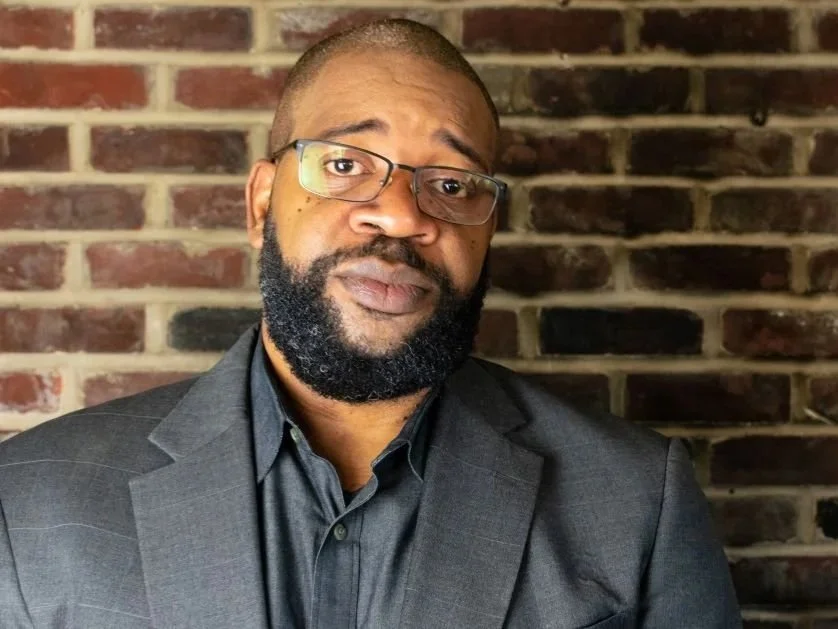
James Peterson, PhD
James Peterson, Ph.D., is a writer, educator, consultant, and host of Evening WURDS on WURD Radio, 900 AM and 96.1 FM, in Philadelphia.
Listen to Dr. James Peterson on his regular radio program on WURD. Evening WURDS is a daily news program dedicated to engaging the WURD community through critical analysis of the news, culture, and arts stories that resonate with the community.
Listen to Evening WURDS:https://wurdradio.com/shows/evening-wurds/
Dr. Peterson is the author of several books, including The Hip Hop Underground and African American Culture, Prison Industrial Complex for Beginners, and Hip-Hop Headphones: A Scholar’s Critical Playlist. He is a columnist for The Philadelphia Citizen and has written for Fortune, Newsweek, The Guardian, The LA Times, Reuters, The Huffington Post, The Daily Beast, and The Grio.
About Our Hosts


About the Podcast
Shamm Petros, Senior Director of Learning & Development at Lion’s Story, brings training grounded in the organization’s 35+ years of racial literacy research and a story-forward approach to racial healing.
Dwight Dunston, a mindfulness practitioner and storyteller, provides the emotional grounding and reflective prompts that model racial stress processing through the body.
Stories that Stay explores how stories of identity shape us. Hosted by Shamm Petros and Dwight Dunston, the podcast is a project of Lion’s Story, where healing happens at the intersection of art, science, and storytelling.
Lion’s Story helps people build real courage, practical language, and skills to navigate discomfort with clarity and compassion — starting with themselves.
Full Episode Transcript
S2 E3 Dr. James Peterson on Racial Stress, Memory & “The Boy in the Mirror”
Transcript
S2E3 Dr. James Peterson
Shamm H. Petros (00:00)
Welcome to Stories That Stay. I'm Shamm Petros
Dwight Dunston (00:04)
And I'm Dwight Dunston, Stories That Stay Podcast is a project of Lion Story.
In this episode, our guest, Dr. James Peterson, will share with us his own personal experiences. And Shamm and I will share practical tools and reflective questions to help you, our listeners, and Dr. Peterson navigate identity and difference with more clarity and less fear. So whether you're an educator, organizer, artist, or someone simply trying to make sense of what you've been feeling in the world around you.
You're in the right place
Shamm H. Petros (00:41)
We always warn our guests though, it will get emotional, but for us, that is the point.
Dwight Dunston (00:46)
Dr. Peterson is already here in the studio. Hey doc, what's up, man?
Dr. James Peterson (00:51)
Hey, hey, hey, hey, yes,
Shamm H. Petros (00:52)
Doc.
Dr. James Peterson (00:53)
yes, yes. Good morning, everybody.
Dwight Dunston (00:55)
Wow, it's so great to have you with us today.
Shamm H. Petros (00:55)
I know.
Dr. James Peterson (00:58)
Great to be here. I'm already emotional by the way.
Shamm H. Petros (01:00)
Re it's good. It's is our
Dwight Dunston (01:02)
⁓ man.
Shamm H. Petros (01:03)
as Dr. Stevenson says, is our superpower. but to really honor that and to honor this moment and the stories that Dr. Peterson is about to share, we want to take some breaths together. This will help all of us prepare for the feelings, emotions, and truths that will emerge. if you're listening, wherever you are, walking, driving, cooking, resting.
I invite you to take a few breaths just for yourself and continue thoughtfully inhaling and exhaling for the next 45 seconds while we share an audio reprieve to support you in that.
You one more real intentional breath. That'd be the best breath you had today so far.
Beautiful.
Dwight Dunston (02:32)
Dr. James Peterson, is here with us already. settling into today's episode, I already began to think about the first time we met, which was years ago, school that your children went to that I happen to work at. and I remember interacting we talked about hip hop, we talked about culture, we talked about education. And I remember just saying, like, I don't know much about who that was, or but that was a dope person. of course when I did some research after and and now looking at your bio
For this, you have authored several books, including The Hip Hop Underground and African American Culture, Prison Industrial Complex for Beginners, and Hip Hop and Headphones, a Scholars Critical Playlist. And then I also was like, this person has this person should be on radio. They have an incredible voice
Shamm H. Petros (03:22)
Ha ha ha
Dwight Dunston (03:24)
you are the host of Evening Words on W R D nine hundred AM and ninety six point one FM here in Philadelphia. You're a writer, an educator, and consultant. you bring so much into this conversation already, Doctor Peterson.
Dr. James Peterson (03:40)
Thank you for that, Dwight. That's too much. ⁓ you know, none none of those books were out when we had had that conversation. That's work. That was in my mind at that time. Yeah, it was in my
Dwight Dunston (03:46)
You you must have been doing the research, man, cause it was rich.
Shamm H. Petros (03:50)
And when we met is when Dr. Stevenson and I were on WRD and we came onto your radio show. We chatted just a bit. I think it was less than like 10 minutes, right? And the healer in me recognized so quickly that this is a man that witnesses and empowers so many people to share their story. And instantly I was like, does he have all the tools he needs to make sure he does that well and in consideration of his wellness and
Dr. James Peterson (04:20)
Thank you for that, Shamm. I I appreciate that sensitivity and and and that empathy. 'cause those are questions, those are real tough questions for me, these days. Real tough questions for me these days.
Shamm H. Petros (04:29)
Yeah. Mm-hmm. And we're gonna put you in a place to be the storyteller, but for us, storytelling is a delicate art and it's a science right. we really practice cathartic storytelling you'll see us cueing you appropriately with questions and mindfulness strategies. and so we shared a bit about your bio, but curious if there's anything else you want to share with our audience on top of this moment.
Dr. James Peterson (04:55)
Yeah, I mean probably what doesn't show up in my bio is you know, I come from Newark, New Jersey and I come from a a big yeah, I'm from Newark, New Jersey and I come from a wow. So I I grew up in Valesburg, not far from Irvington at all. Mm hmm.
Shamm H. Petros (05:03)
What? I was raised in Irvington. Yeah! Whoa!
Okay, okay, okay.
Dr. James Peterson (05:15)
Yep, see, see Shamm, see, and I've had the privilege of of raising my own family with my wife as well. And so what doesn't show up in the bios I'm I'm a family guy, you know, through and through.
Shamm H. Petros (05:25)
Yeah.
Dwight Dunston (05:25)
Yes, beautiful, beautiful, yeah.
Shamm H. Petros (05:29)
I just felt like you're we already know so much about each other, I will say.
Dwight Dunston (05:32)
Ha ha ha.
Dr. James Peterson (05:33)
We're ho we're literally homies, Shamm. We're literally homies. Yeah, like literally. Yeah. Mm-hmm. Mm-hmm. Mm-hmm. Yeah, who knew? Who knew? Mm.
Dwight Dunston (05:35)
Right right right. Wow. Wow. Beautiful.
Shamm H. Petros (05:35)
We're literally I can't believe it. ⁓ my gosh. Okay. ⁓
Dwight Dunston (05:42)
at the top of our time, before we ask our core question to guests, we always invite our guests to just think about how they're feeling
And even preparing to share their stories, their early memories. So we wanna ask you on a scale from one to ten, how are you feeling about sharing your story today? With one being not stressed at all, ten being very stressed.
Dr. James Peterson (06:09)
I'm not very stressed, that's that's for sure. I mean, I think the way that my mind works is, you know, I wanna make sure that I'm telling a story that's my story to tell first, right? and I am I'm very open to this process, Dwight. because I've been struggling with a lot of things that are they're gonna come across as really intellectual, but for me they're like spiritual things. ⁓
Shamm H. Petros (06:12)
I think Okay.
Dr. James Peterson (06:34)
when you talk to people every day and you talk about what's going on in the world every day, you're carrying a certain weight with with those conversations and with what's going on in the world at any moment, but particularly in this in this in this moment. And I have to be really serious with myself about the extent to which I'm doing the work.
with myself to make sure that I'm processing all of that and not holding things that I don't need to hold and and and working through the things I need to be able to to work through. It's a great privilege to talk to black folks on the radio every day. it's an honor. but there's a weight that comes with that. ⁓ that that I have to make sure that I'm that I'm processing. And so that's a part of it's not stress, it's just ⁓
Shamm H. Petros (07:02)
Mm-hmm.
Dr. James Peterson (07:19)
making me contemplative going into the process.
Dwight Dunston (07:22)
Mm.
Shamm H. Petros (07:23)
Is it? ⁓
Dwight Dunston (07:23)
Yeah, yeah. So if you ha if you had to give that maybe it's not stress. Ma contemplative on a scale from one to ten. One being not contemplative at all, ten being very contemplative. It's a ten. Yeah, yeah. Right.
Dr. James Peterson (07:32)
It's a ten. It's a ten on the contemplative scale. Yes. Yeah, it's a ten. That's a ten.
Mm-hmm.
Dwight Dunston (07:37)
So maybe it's more like a one or two on a stress level, but a ten and contemplative. Wow. Okay, beautiful. Beautiful. Well, I wanna
Dr. James Peterson (07:41)
Right. But yeah, yeah.
Shamm H. Petros (07:43)
Yeah.
Dwight Dunston (07:47)
Thank you for just slowing down to to notice and share that the top of our time. I'm gonna pass it to my co-host Shamm to take us through the next part of our time together.
Shamm H. Petros (07:58)
And Dr. Peterson, we're gonna ask you a question about likely something that happened in your early childhood, just earlier on in life.
There's always a plethora of data in our earliest narratives where we've noticed conflict or tension
You know, it require courage, but curiosity, I think, is the best rate to hold right now. Curious about yourself. And with that preamble,
Dr. James Peterson (08:19)
Mm-hmm.
Shamm H. Petros (08:23)
question for you today, Dr. Peterson, is what's the earliest memory of difference that you recall?
Dr. James Peterson (08:29)
Well. is really hard to to pin down. and and maybe it's like trying to understand like w what kind of difference do I want to think about, right? In terms of of my earliest memories. but you know, I can go back as far as maybe even when I was about five or six years old.
It's not a memory of of of difference necessarily, but it's my earliest memory. And let me start from there. It's my earliest memory. One of my earliest memories is it must have been the day of or the day after the passing of my paternal grandmother. And I remember my mom huddling us up. It was me, my
Shamm H. Petros (08:54)
Okay.
Dr. James Peterson (09:12)
immediate younger sister and my older brother, like literally like getting us into a huddle to share with us that my my grandmother had passed away. And I don't remember what my emotional experience is, but that is literally one of like my earliest memories. You know, I I went to Catholic school,
In Newark, New Jersey. I went to Sacred Heart at first and ⁓ and when my parents got divorced, we we were a little bit homeless in a certain way. So we were like because there was it was a pretty brutal divorce initially between my mom and my dad. And so my mom took us out of our childhood home and
we were staying with like relatives of someone that she was building a relationship with at that time. But we started to go to another Catholic school and this one was in East Orange. So the one that was in Newark was like still predominantly black. But the one that was that was in East Orange was still predominantly white. And you know, i i there were
There were a lot of traumatic things that were happening in my life at that time. but I absolutely was coming to terms with what it meant to be black. I didn't formulate in my mind that way, but just understanding my difference by the way that teachers were treating me, the way they were treating my brother, the way that
Shamm H. Petros (10:31)
Mm-hmm.
Dr. James Peterson (10:36)
white boys and girls were were treating were treating me and my siblings in that school. I didn't even know how to process it then, but now I can look back and and think of that that that were those were some of my earliest experiences with racism.
Shamm H. Petros (10:47)
Mm. a tip I often provide for folks, right? When they're going back to this time and there's a lot of memories,
If there's something your body is telling you, that's where I would tell you to go. If there's a memory, a moment, right? And sometimes we tell, we ask people, what is the one causing you stress right now? Right. Like you're getting excited in some way or another about it. And go where your body is taking you.
Dr. James Peterson (11:03)
Yeah.
I'm having like a a defensive reaction like you know, there there for me there
Shamm H. Petros (11:20)
Mm-hmm.
Dr. James Peterson (11:22)
times in my life where I wish I had the tools I have now to respond to certain situations. You know, I can I remember I I went to Newark Boys Chor School and and the way that I remember this story might not be how it actually went, but here's how I remember it. we it was a very Newark Boys Chorus School is a professional chorus school like Harlem Boys Choir and like that, where you from fifth through eighth grade you're
Shamm H. Petros (11:27)
Yeah.
Dr. James Peterson (11:45)
You're a you become a classically trained musician. ⁓ at that time had become predominantly black. It probably was more diverse or had more white students in it prior to me being there, but it was predominantly black when I was there. But all or most of the leadership was white. The choral director was white. his name is Mr. Butterfield.
And ⁓ we were preparing for some kind of concert series and there was it was probably traditional Negro spiritual a group of my friends felt like they didn't want to do the song, right? Because of the language and they just they associated it with with slavery and and I don't really know how I drew the straw.
But but I was tapped to be the one to to speak to the choral director during rehearsal and basically say like, hey, we're not doing this song. And and and I don't remember exactly what I said, but I did I interrupted our rehearsal and ⁓ to the best of my ability I tried to explain ⁓ t to to the choral director, like, hey, like we're
We're we're not gonna do the song, you know, we gotta do something else. And I remember being scared doing that, but also realizing that like not only did they think that I was the guy to communicate that to the power structure, but that I felt responsible for that. You know, I know spirituals differently now and I understand the history of them differently now, but just as young black boys in Newark, we were like, we don't wanna sing like slaves. And
Shamm H. Petros (13:16)
Mm-hmm.
Dr. James Peterson (13:17)
And however I communicated that to Mr. Butterfield, they removed that song from from from our repertoire. and it was it was it was understanding like yes, we have a different experience and I have to represent a collective and gotta talk to the white power structure about what we're doing or not doing, but it was a big victory.
⁓ I don't want to say that made me a raceman, but that kind of helped me really understand that there is there's more to my identity as a black man, as a black person
than just suffering through the black boy growing up in in in Newark New Jersey. But I remember that. And again, I don't even know if that's how it went down, right? Like
I must have been, I don't know, ten, eleven, maybe twelve years old.
Shamm H. Petros (14:04)
wow. Okay. First of all, wonderful. And not wonderful that that happened to you, but wonderful that you gave yourself the space. Right. You named you were feeling defensive, but you gave yourself the permission and space to center you, youngest you, in these moments of decision making and conflict. so I'm very grateful for that, share, ⁓ Dr. Peterson. I'm very proud of you, if I may add.
Dr. James Peterson (14:27)
Mm. Mm.Thank you.
Shamm H. Petros (14:31)
And now what we like to do when we hear narratives like this is not necessarily get more context around the character, the moment, right? We are hoping that in this moment you can illuminate to yourself more data about that moment, right? And you mentioned a couple times, I'm not sure if this memory was real. That actually does not matter much to the brain, right? It's like actually.
Dr. James Peterson (14:38)
Mm-hmm. Yeah. Right. I get it.
Shamm H. Petros (14:57)
Like outstanding how the brain works, in which if you remembered it as such, your body is responding to it as such, right? But now, if I can ask you a couple of questions to just really dive deeper into that memory. Now, if you're you're looking back now, you're about 10 or 11 years old. You're in Newark Boys chorus school, predominantly black at this point.
Dr. James Peterson (15:04)
Mm-hmm. Mm-hmm.
Shamm H. Petros (15:20)
You're getting ready to perform or rehearse, and your group of peers feel very uncomfortable with a song that was selected. And somehow, I don't know why this is a mystery. I see it in you. Somehow you were elected as the messenger, the envoy, you know.
Dr. James Peterson (15:28)
Hmm. It makes more sense now than it did to me then. Yeah, yeah, yeah.
Shamm H. Petros (15:43)
Listen, listen, that's listen. And you had to approach Mr. Butterfield and really communicate somehow. And that moment is blurry even, but that's okay. reliving this memory.
Dr. James Peterson (15:56)
Mm-hmm.
Shamm H. Petros (15:56)
Can you tell us what emotions you're feeling? And with each emotion, we're gonna ask you similarly to our first question, can you scale a one to ten? So is that like pride at a nine, but then scared at a seven and a half? can you name and feel free to name all the emotions, but please scale them all for us.
Dr. James Peterson (16:17)
Right. And so I am so telling that story is is excavating a lot of other stories for me. Okay. And so I'm feeling a sense of discovery about on ten. Not that these are not stories that I'm aware of, but stories that just are coming to mind now out of the framework of of of sharing that one story.
Shamm H. Petros (16:28)
Mm-hmm. Okay.
Dr. James Peterson (16:43)
Right. And and I'm I'm feeling sad. maybe not on ten, but maybe sadness at like a seven or eight because just seeing my younger self and struggling through the things I had to struggle through, ⁓ without the language, without the grammar really, to to understand the structures that were shaping me. I I remember, you know, w when I graduated from Norfolk Boys Core School, I I
Dr. James Peterson (17:09)
became an ABC student a better chance. And and what ABC did at that time was it took, you know, inner city kids out of school systems and placed them in usually white private schools in New England, but I was at a particular program that placed me at a public high school in Simsbury, Connecticut, a really good high school, but it was really white and really wealthy and it was really alienating to be there.
And particularly in the first year. It took me, you know, it took me years to get acclimated there. But I remember in my I struggled a lot, academically and otherwise, in my first year, just being away from home and all the things. But I remember ⁓ one day being in the bathroom and it was like a it's like a a weird bathroom in the sense that it's like a bathroom that served like nine boys lived in the house. So this is a bathroom that was big and had showers and different things and at the back it had like a big mirror. And there were other mirrors in there so that their the reflections could bounce off each other. And I don't know what specifically had precipitated this. but I'm in that mirror and I'm looking at my face and I'm looking at my nose and I'm looking at my lips. And I literally want my lips to be thinner. I want my nose to be smaller. Again I don't know what specifically
Shamm H. Petros (18:03)
Mm-hmm.
Dr. James Peterson (18:26)
precipitated that or what was animating that other than the the whole experience of being in this you know very white world and and it was just it's just so sad to think of myself in that moment you know it not really anything I could share with anybody not really anything I I could process properly it's almost like the opposite of the story that I told where I'm feeling triumphant about pushing back against
Shamm H. Petros (18:29)
Yeah, he was
Dr. James Peterson (18:54)
the structures of white supremacy as I could see them as a ten, eleven, or twelve year old, and then I'm fourteen and fifteen, and it's it's completely overtaken my mind to the point where I literally want to change my physical features.
Shamm H. Petros (19:05)
Yes. Yeah. And there is a connection there, you know, like we just ask of you to identify your emotions and scale them. But in this process, it's called C L C B E. Calculate your emotions, locate them, describe self-talk and self-imagery. Oftentimes you do find this where
The imagery is incongruent seemingly and takes us to another place in our in our narratives, right? So I will recognize that as self is some imagery that's coming up for you. And I want to bring you back to this place where you did say that you're just a sense of discovery out of 10, sad seven at eight. Earlier on you did feel defensive. Do you want to quickly give defensive a qu a number?
Dr. James Peterson (19:55)
defensiveness is my knee-jerk reaction to racism and white supremacy. Like that's the defensiveness, like wishing I had different tools or being able to at least discursively chop people's heads off, you know, when when I'm in those situations, right? So that that that defensiveness is ⁓ moderated now as I'm thinking through different
Shamm H. Petros (20:11)
Yeah.
Dr. James Peterson (20:18)
stories and and memories, but that as you start to kind of excavate some of those emotions and some of my memories around, you know, how I experienced specifically racial difference here as a young person, I feel defensive for that young person.
Shamm H. Petros (20:34)
Okay, that's even a grayer just section. We took it to three to defensive for younger you, can I say that? One to ten, how would you scale that?
Dr. James Peterson (20:40)
Hm yes. That's that's on ten in some of the things I'm sharing with you. And like I I I wish that in that mirror moment that I I ha had some outlet for that. Like w the sadness that I feel about that is that that was that. That is what I felt.
Shamm H. Petros (20:56)
Yeah.
Dr. James Peterson (21:01)
I remember that feeling as a very young teenager with all the things going on when you're fourteen, fifteen years old and you're from Newark, New Jersey, but you're living in like suburban Connecticut at like a really in a wealthy town, wealthy high school here, kids driving Porsches to my school.
Shamm H. Petros (21:14)
Yeah.
Dr. James Peterson (21:19)
Right. And, you know, it's just it's there are a lot of different levels to the cultural shock, but it it had really infected my mind by that point. and that's just again, it's just ⁓ devastatingly sad to me.
Shamm H. Petros (21:20)
Yeah. And I want to ask now again in this process C L C B E, do you feel any of these emotions anywhere in your body or in your movement?
Dr. James Peterson (21:42)
I mean, I feel it my chest, you know, and ⁓ I can feel it in the in my tear ducts because I feel like crying. you know, I I these are these are not memories that are like super distant for me either. I just don't think about them in this way, right? And and but it's it's it's making me feel like there is work for me to do because I'm a I'm a writer.
Shamm H. Petros (21:56)
Mm-hmm.
Dr. James Peterson (22:03)
Dwight, you know this, Shamm, you know this. I'm I'm a writer. And
Shamm H. Petros (22:04)
Mm-hmm. Mm-hmm.
Dr. James Peterson (22:07)
and I think my writer's mind is like, bro, you gotta sit down and write some of these things down. You gotta, there's there's some threads here. I always tell people like, I've never broken a bone before, I've never been in the hospital before. And it's not true, right? I a few months back.
Shamm H. Petros (22:12)
Yes.
Dwight Dunston (22:20)
Hmm. Hmm.
Dr. James Peterson (22:22)
⁓ my brother was like searching the Newark Public Library archives, and he pulled up, he found a photo of our family. At some point, my mom hired a professional photographer to do a family photo. And that photo had it had me in it as an infant sitting in my mom's lap. It had my mom, my dad, my mom's afro is immaculate. I can see it right now. And it had
Shamm H. Petros (22:43)
Mm-hmm.
Dr. James Peterson (22:46)
My three older brothers. Now, my two oldest brothers are from my dad's previous marriage. Okay? But that's the photo. This is before my sisters or all my sisters are younger than me. This is before any of them were born. That's the photo. Now, in this photo, both of my legs are in casts as an infant, right? Now I don't think they do this anymore because this sounds really brutal and archaic to me, but I was born bow-legged, and so they broke my legs.
Dwight Dunston (22:57)
Mm.
Dr. James Peterson (23:12)
It was so severe according to them, it was so so severe they broke my legs and reset them. So even though I say I've never ⁓ I never been out never broke a bone in my body before, both my legs were broken as an infant. And I I look at this photo and I'm just studying and studying and studying it and I'm like, man, you know, I wasn't experiencing pain in the photo. I'm I'm I'm I'm damn near smiling, but I have to think about like what was that pain like?
Dwight Dunston (23:23)
Wow.
Dr. James Peterson (23:37)
For my infant body. Right. And it reminds me of the story that Stephen King tells about his journey as a writer. I've read like a lot of books about writing. And what Stephen King says in his book was that one of the reasons why he's such a great writer is because he got sick or something happened when he was very, very young, and he experienced excruciating pain. And he turned that pain into the auvoir of Stephen King, right? And so it made me think about that. But then
Shamm H. Petros (23:40)
Yes. Mm-hmm.
Dwight Dunston (23:56)
Mm.
Shamm H. Petros (24:03)
Mm-hmm.
Dr. James Peterson (24:05)
I was like, wait a second. So my two older brothers are in this picture, right? How does their mom experience that picture in real time? Right? Their mom is not my mom, right? How how does their mom experience that picture in real time? And and and and again, this is the chain of memories. I remember being at their mother's
Shamm H. Petros (24:10)
Yeah. The same. Yeah, yeah.
Dr. James Peterson (24:31)
Bedside when she was close to transitioning. Another vivid memory of mine. Again, not really my story to tell, but it's it's it was it was a devastating experience because she was afraid to die. And it was the first time that I had experienced that in real life. And it has always made me feel more connected to her. And that is why when I look at that image of my mom, me and my brothers and my dad.
Shamm H. Petros (24:34)
Mm-hmm.
Dr. James Peterson (24:57)
I could I could then think for a moment, yes, like what me and my my legs in cast, I'm feeling pain, but think about the pain of my brother's mother seeing that picture of her two sons in there with her ex husband and his his new wife. It's just it's a devastating image to me. Anyway, it's a beautiful image, but devastating in terms of, you know, the pre memory of like w how did it impact me to have my legs broken at such a young age? I don't know. ⁓
Shamm H. Petros (24:58)
And you and a cast. Yeah. Yeah.
And this is why we are so calculated in how we process stories, because we hold memories, we hold these narratives cognitively, but also in our bodies. Like personally, I've had an analogy in my head, like if I swallow the story, I'm bloated. But if I write it, maybe I'll sing, you know, I can sing it out, right?
Dwight Dunston (25:27)
Hm.
Dr. James Peterson (25:45)
Mm. Mm.
Shamm H. Petros (25:46)
To then sit with yourself and as we just asked you, can you calculate all the emotions and scale them endlessly? And there's no limit. Can you locate on where you feel in your body? You've mentioned chest and tear ducts. But is your chest full? Is your chest, is there a ping? Like, can you go into detail? Details also so good. And you're doing this fluidly, right? But like, can you look at your self-taught? What am I telling myself in these moments, right?
I've we annotated a bit of that. Like I wish I had an outlet. How did I work to through this? Did I even work through this? Right. ⁓ and then even the imagery, right? Like the imagery of you in the bathroom, in the mirror at Better Trans High School in Connecticut, right? And looking at yourself and wanting to change everything about your physical perception, right?
Dr. James Peterson (26:20)
Mm-hmm. Mm-hmm.
Shamm H. Petros (26:37)
So this is a formula and I'm gonna send you this because our time is coming to a close. I'm gonna send you this, right? And I really hope it's valuable for you. And not even for the art of writing. For you just to feel and the diff and process. Like there is a difference between remembering and like digesting a memory too, right? And what you call now a tragic photo may very well after this process mean a lot of different things to you.
Dr. James Peterson (26:50)
Process.
Shamm H. Petros (27:05)
Storytelling is like an endless kaleidoscope, right? It could feel intimidating and never ending in a way, but I still very liberating that our bodies have held this. and write it out. Write it out, voice note it out. This is to our audience and listeners too. No one's gonna stop you in your journal. I ain't gonna come and say, hey, we don't have enough time, right?
Dr. James Peterson (27:24)
Right, right.
Shamm H. Petros (27:27)
name all those feelings in detail, make up the word if you have to. A lot of kids do that. Locate it and get specific about that location. It's a buzzing in my finger, right? Or in my right hand. Self-talk, write it all out. And maybe once it's written, I'll look at it and be like, I wonder what the purpose of that was. Maybe that was to protect me in the moment. Maybe that was to correct me. Maybe that I said that in my head just because my parents have said that to me for so long.
Dr. James Peterson (27:39)
Mm-hmm.
Shamm H. Petros (27:56)
And explore these imageries. And I know we've expanded, like that discovery you're at a at a 10 is really felt here. And I love that for you, you know? And I don't want you to feel overwhelmed by it. So I want you to know there is a process. And this is just the beginning, you know? What we offer at Lion Story in our trainings with Dr. Stevenson's research, it's a universe of ways to not only process our stories.
Dr. James Peterson (28:06)
Ha ha ha ha.
Shamm H. Petros (28:23)
And make meaning out of them and reclaim them, right?
Now I Dr. Prize, I'm gonna kind of direct you to this big question we started with as we're ending.
Dr. James Peterson (28:27)
Mm.
Mm-hmm.
Mm-hmm.
Shamm H. Petros (28:35)
And I, you know, I've seemed I kind of just flowed through your C L C B E ⁓ as best as I could just to give that back to you. But now we've gone through this time travel for real, for real. in in the beginning, I believe you described that you were
Dr. James Peterson (28:41)
Mm-hmm. Mm-hmm.
Dwight Dunston (28:51)
a one w just a one or two on the stress level, but you were a ten on Contemplative. Ten on contemplative.
Dr. James Peterson (28:56)
Contemplative. That's right. That's right. That's right. Yeah.
Dr. James Peterson (29:00)
Yeah. My mind is my mind is moving. Not super fast, but it is in constant motion right now.
Shamm H. Petros (29:07)
I love it. So now after having Sharon, where would you put that stress level or that comp the contemplative level?
Dwight Dunston (29:08)
Yeah.
Dr. James Peterson (29:15)
So I'm not stressed because I do have to write about this. And you're right, it's not about writing about it for anybody other than myself. I have a pretty good voice note process too. And it's so weird because I use that for a lot of different things, but I never used it to write about myself. and so, and so I ⁓ there there's some things I need to do.
Shamm H. Petros (29:30)
They
Dr. James Peterson (29:33)
And so contemplate still on ten. I probably will stay out of ten through most of the day. until I until I can get my arms around a process for just getting some of the things that I share with you all down on paper. I gotta I gotta do that. and and y you know what else? I'm just I'm really grateful right now. I'm really grateful right now. I'm grateful that
Shamm H. Petros (29:44)
Mm-hmm.
Dr. James Peterson (29:52)
for God to allow me to even access some of those memories, ⁓ to feel comfortable enough with you, Shamm and with you, Dwight, to share it and share it with the world. and also really grateful that that I'm not the boy in the mirror in this sense. I have some tools. I know how to work work through some things. You know, I I I
Shamm H. Petros (29:55)
Mm-hmm. Yeah.
Dr. James Peterson (30:11)
I've been studying some things recently that or even adding more tools to the to the toolkit. And so I I feel grateful for for for that and for the ability to work through some processes in ways that maybe I couldn't when I was fourteen, fifteen years old.
Shamm H. Petros (30:23)
I invite you to take a few closing breaths together, all of us, even in the studio, just for you.
As you transition away from this podcast and turn to what your day holds next.
Another deep, deep breath.
Dr. Peterson, I wouldn't be me if I don't encourage you to take real time for yourself today. Make it a messy exploratory self-hit those voice notes. That's my way. read, touch grass. It would be a crime if this moment stays here and if it's not used for what it may allow in you. And I see a lot of that.
Dr. James Peterson (31:01)
I agree and and I'm I'm on that mission. Trust me Mm.
Dwight Dunston (31:05)
we often ask our guests to to give their story that they shared, either a a title or a hashtag, and you brought us into a few stories, you know, there were so many images, so so many tales that started to weave together, but if if you had to give the stories you shared here a a hashtag or a title, anything coming to mind? Any way that you would you would categorize it?
Dr. James Peterson (31:29)
Ha ha man. I mean, I I don't know about a title, Dwight. What I guess, you know, it's it's about time for me to come term come to terms with with with with those memories and and and I don't know that I don't know how you put that into a title, but that's that's how I'm s processing this experience and it's gonna help me to I think to to be able to write about it in certain ways.
Dwight Dunston (31:48)
Yeah.
Shamm H. Petros (31:51)
Mm.
Dwight Dunston (31:54)
the tale of James Peterson, you know, that just you can't incorporate one moment because it is, like you said, this sort of larger, broader view. It's just like a st the story of James Peterson, period.
Dr. James Peterson (31:55)
Mm-hmm.
Shamm H. Petros (31:56)
Mm-hmm.
Dr. James Peterson (31:58)
Mm-hmm.
Shamm H. Petros (32:05)
Yeah.
Dr. James Peterson (32:07)
Mm. Mm-mm.
Mm. I'm on and I'm on I'm on the job.
Shamm H. Petros (32:09)
⁓
Dwight Dunston (32:13)
Yeah, thank you and thank you for being we talk a lot about what how do our healers get healed, right? I just really see you as a person who amplifies voices, witnesses other people in their stories and experiences, and that's healing for them. And so our hope
Shamm H. Petros (32:20)
Mm-hmm. Yeah.
Dr. James Peterson (32:27)
Right.
Dwight Dunston (32:29)
At Lion Story, our hope on Stories That Stay is as Shamm said at the top, that you feel a little bit more healed, like your your cup is a little bit more full full, so you can go out and do your work, Doctor Peterson.
Shamm H. Petros (32:39)
Mm-hmm.
Dr. James Peterson (32:41)
I appreciate
Shamm H. Petros (32:41)
Mm-hmm.
Dr. James Peterson (32:41)
that and and So next Friday, my wife and I are going away. And while I'm away, I'm really going to wrestle with what we did here today. And my voice notes will already be done by then, so I'll have some stuff to wrestle with. And I'm gonna really try to figure out like how do you you can be Dr. James Peterson, WRD, professor, blah blah blah, serve people. I wanna do that.
Dwight Dunston (32:46)
Beautiful.
Dr. James Peterson (33:06)
But if you wanna really be a servant in perpetuity of your life, you gotta figure out how you make it sustainable for yourself. And so have some tough questions about about that.
Shamm H. Petros (33:16)
thank you so much, Dr. Peterson. I this was ⁓ such a filling interview for us, an episode for us.
Dr. James Peterson (33:16)
Literally.
Shamm H. Petros (33:26)
And I want to take a moment now to also thank our audience for tuning in to Stories That Stay, how stories of identity shape us. This podcast is a project of Lion Story. And to learn more about Lion Story, our trainings, our workshops, our learning experiences and resources, please visit LionStory.org. So that's Lion Story2s.org. And
This episode of Stories That Stay was produced and edited by Peterson Toscano. Music during our mindful moment comes from Dwight Dunstan himself. Other music comes from epidemicsound.com. And to see the show notes and transcript of this episode, please visit stories that stay.net or our lion story homepage where you can fully where you'll read a full transcript.
And Dr. Peterson's bio and resources. thank you again for joining us. We are here to help you build the real courage, the practical language, and skills to navigate discomfort with clarity and compassion, starting with yourself. If you found value in today's episode, please share this with someone who needs this.
If you haven't done so yet, I invite you to review and subscribe to Stories That Say. We are grateful for any and all of your support, from one listen to a like to a comment to a share. To help this community grow, your support turns our research into practical tools and trainings for people who need them the most.
Dwight Dunston (34:54)
So until next time, keep listening, keep learning, and keep telling your story. And please remember that you are your most important listener.
Dr. James Peterson (35:05)
Thank you.
Learn More & Resources
Visit Lion’s Story to explore our mission, training programs, and upcoming events like the
Resilience Literacy Institute.
Stories That Stay is a project ofLion’s Story, a nonprofit dedicated to building racial literacy through storytelling, mindfulness, and healing.
Rooted in over 35 years of research by Dr. Howard C. Stevenson at the University of Pennsylvania, our work guides individuals and institutions to reclaim their stories, reduce identity-based stress, and step into authentic inclusion—not as a checklist, but as a way of being.
Produced and edited byPeterson Toscano.
Mindful moment music byDwight Dunston.
Music byEpidemic Sound.
Podcast site: storiesthatstay.net
Hosts: Shamm Petros and Dwight Dunston
Learn more about Lion’s Story:https://www.thelionsstory.org
Explore Lion’s Story services and trainings:https://www.thelionsstory.org/services
Learn more about CLCBE and racial literacy:https://www.gse.upenn.edu/news/using-clcbe-framework-challenging-discussions
Learn more about Hip Hop Headphones: A Scholar’s Critical Playlist:https://www.bloomsbury.com/us/hip-hop-headphones-9781501308260/