
Stories That Stay
Episode 1 - Stasie Maxwell
Subscribe Wherever You Get Your Podcasts
About Our Guest
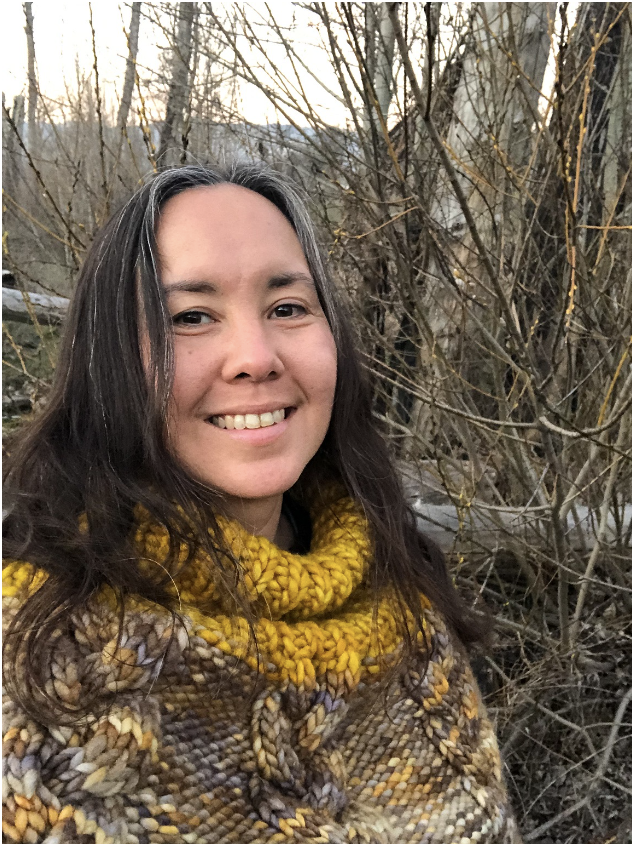
Stasie Maxwell
Stasie Maxwell is a community leader whose work focuses on land trauma, Indigenous language, community healing, and reconnection to ancestral homelands. Rooted in the Rogue Valley and the intertribal community in Southern Oregon, Stasie works with tribal communities and Native youth while helping create pathways for people to return to land, language, and cultural memory.
She holds a degree in psychology and has maintained a qigong practice since her early twenties. In this conversation, Stasie reflects on how body awareness, breath, and emotional practice have shaped her healing work and her ability to hold both painful and joyful stories with care.
About Our Hosts


About the Podcast
Shamm Petros, Senior Director of Learning & Development at Lion’s Story, brings training grounded in the organization’s 35+ years of racial literacy research and a story-forward approach to racial healing.
Dwight Dunston, a mindfulness practitioner and storyteller, provides the emotional grounding and reflective prompts that model racial stress processing through the body.
Stories that Stay explores how stories of identity shape us. Hosted by Shamm Petros and Dwight Dunston, the podcast is a project of Lion’s Story, where healing happens at the intersection of art, science, and storytelling.
Lion’s Story helps people build real courage, practical language, and skills to navigate discomfort with clarity and compassion — starting with themselves.
Full Episode Transcript
Stories that Stay - Season 2, Episode 1
Stasie Maxwell: Beauty and Pain Held by the Breath
[00:00:00] Cold Open and Introduction
Stasie Maxwell: One of the older girls came up to me and she squealed and she was like, "Oh my gosh, you're so cute with your hair up." She's like, "You look like a little snow monkey with your ears poking out." I just remember being mortified.
Shamm Petros: Welcome to Stories that Stay, where healing happens at the intersection of art, science, and-
Dwight Dunston: Storytelling. Stories that Stay podcast is a project of Lion's Story.
Shamm Petros: I'm Shamm Petros.
Dwight Dunston: And I'm Dwight Dunston. Whether you're an educator, organizer, artist, or someone simply trying to make sense of what you've been feeling in the world around you, you're in the right place. In this episode, our guest, Stasie Maxwell, will tell us a personal story. Shamm and I will share practical tools and reflective questions to help you and Stasie navigate identity and difference with more clarity and less fear.
Shamm Petros: Dwight and I have spent the last five years training thousands of people to confront identity-based conflict and transform their stories into tools for healing and change. In our second season, we continue to explore stories of resilience, rupture, and repair, guided by people who have found language for their truths. We always warn our guests that it does get emotional here, but for us at Stories that Stay, that's the point.
[00:01:30] Breathing Together Before the Story
Dwight Dunston: Our guest today, Stasie Maxwell, is already here in the studio. What up, Stasie?
Stasie Maxwell: Hello, everyone.
Dwight Dunston: Hello. Hello. It's so great to have you with us today.
Stasie Maxwell: So happy to be here.
Shamm Petros: So to honor everything that's going on in this moment, right, our time together and the stories that Stasie is about to share with us, we're going to take some time now to breathe together. This will help all of us prepare for the feelings, emotions, and truths that will emerge from these stories. For you listening, walking, driving, or resting, or cooking, or working, I invite you to take a few breaths just for you, and continue inhaling and exhaling for 45 seconds. We'll provide an audio reprieve as you keep breathing, keep inhaling, keep exhaling. And we at the studio here will take some time to do that now.
[Breathing pause]
Shamm Petros: Maybe one more deep one for us. Thank you. We love an audible exhale.
Dwight Dunston: Music to our ears, Shamm.
Shamm Petros: No, it really is. Cue it, please. It always feels like an internal shower, a bit, you know?
Dwight Dunston: Mhm.
[00:03:15] Stasie's Work, Land Trauma, and Community Healing
Shamm Petros: So we have a very special seat filled here today at the studio. Stasie Maxwell is here with us. And Stasie, I've been looking forward to this conversation for a while now. Your work sits at such a vital intersection of land trauma and deep community healing. Welcome to the show.
Dwight Dunston: Yes. And Stasie, for our listeners who are just meeting you, your journey is so deeply rooted in the Rogue Valley, the intertribal community in Southern Oregon where you grew up. I'm such a fan of yours, Stasie. We got to do some incredible work together during the pandemic, organizing one of the largest affinity spaces for folks of color doing work in the outdoors and nature and environment. We'll talk a little bit more about your work in community. But you've maintained a qigong practice since your early 20s. I can just remember being in meetings with you and being like, wow, Stasie is so relaxed right now. She's calm, you know? And I can really feel the way that your energy is centered even here in our space today, how you arrived, but also going back to our times in those virtual meetings during the early days of the pandemic.
Stasie Maxwell: Thank you. Yeah, qigong has really played a big part in my life, maintaining my inner self.
Shamm Petros: It's that groundedness that powers your advocacy. I assume you do the heavy lifting for land justice, helping Tribal people who were moved from the Rogue Valley, dating all the way back to 1856, to finally have the space and funding to reconnect with their own ancestral homelands.
Stasie Maxwell: It's really beautiful emotional work.
Dwight Dunston: We know you're not simply looking at the past. As a strategic leader, you are also looking forward to the next generations.
Shamm Petros: In addition to doing that trauma-informed community building and advocacy, you have such a special place in your heart and your work for Native youth. Some of the most meaningful work I've ever done in my personal or professional life is with youth, in both the U.S. and abroad. And there's just something very special about connecting the next generation to all of this, and to this call to share and a call to action.
Dwight Dunston: We've shared a bunch about you, Stasie, and I'm curious if there's any other things you want to name about yourself, personally or professionally, here at the top of our time together.
[00:05:00] Worldview, Language, and Breath Work
Stasie Maxwell: Something that comes to mind that I've thought a lot about in my work recently is worldview and language. So much knowledge is encoded, as we say, in Indigenous languages. Ties to place, how we're connected to place, seasonal patterns, cultural knowledge - so much is encoded in language. How we think informs how we act. How we think is therefore also impacted by how we feel. So meditation and breath work is really at the root of a lot of thinking and behavior.
Shamm Petros: Yes, that's a great distinction, and that's so aligned with the work we do at the podcast and Lion's Story, understanding how you think and how that impacts how you speak and what you believe. Thank you for highlighting that. That makes me feel like we're going to be right at home in today's conversation with you. Before we get to the protein of the meal today, there's a sandwich part. We like to ask guests a quick question before and after we get to our storytelling part.
[00:06:25] How Are You Feeling About Sharing Your Story Today?
Shamm Petros: So, Stasie, I would like to ask of you today, in this moment, on a scale of 1 to 10, with 1 being the least nervous, not nervous at all, and 10 being very nervous, how are you feeling about sharing your story today?
Stasie Maxwell: I would say maybe a three.
Shamm Petros: Ooh. Okay. That center right there. I love it. Beautiful. A 3 out of 10. Thank you for sharing. And I'll pass it over to my dear friend and co-host Dwight to take us through the next part of our time together.
Dwight Dunston: Amazing. So we always ask our guests the same prompt, and so we're going to do that here. And then the microphone will be yours, Stasie, and we'll follow up with some questions and a process that's connected to Dr. Stevenson's work.
[00:07:05] Earliest Memories of Difference
Dwight Dunston: But really take as much time as you need to with this question. That question is, what are the earliest memories of difference that you recall?
Stasie Maxwell: It was a good question. I journaled about this and came up with a couple different memories to share. And it was kind of fun to think back to my childhood and think of the various kinds of differences that there can be. Difference usually came up as something that happened, traumatic at first. And then after I got some of that out, I was like, oh, difference doesn't always have to be traumatic. Sometimes it can be funny and joyful.
One of the traumatic ones, I'll say, was I was in middle school. I had my hair up. One of the older girls came up to me and she squealed and she was like, "Oh my gosh, you're so cute with your hair up." She's like, "You look like a little snow monkey with your ears poking out." I just remember being mortified. She could tell I was embarrassed, and so she apologized and said she meant it as a good thing. But I did not wear my hair up in a ponytail again for decades. Actually, I didn't wear my hair up in a ponytail much in public until I was in college and I got into sobriety. One of my sponsors was like, "That's something you need to work on. One of your tasks today is to wear your hair up in public."
Dwight Dunston: Wow.
Stasie Maxwell: I was so self-conscious. They were like, "This will help you get through it. It's kind of like exposure therapy." I do wear my hair up in public now. Like, I have gotten over that. But yeah, I didn't wear my hair up for decades in public after that comment.
Dwight Dunston: Congratulations.
Stasie Maxwell: Another one was how I was treated in my home differently. My maternal grandfather lived with us when we were growing up, and he used to treat my brother differently than me. As I got older and talked to my mom, I came to learn why, but I definitely remember it was impactful to me in a hard way.
One of the memories that came up was he was mad at me. We had got into a fight. I was probably less than 10 when this happened. My brother and I went into his bedroom to say goodnight to him. He was laying on his bed watching TV. And I remember he hugged my brother and kissed him on the head and told him he hopes he sleeps well and good night. And then when I went up to say goodnight to him, he just laid in bed and didn't acknowledge me and didn't say anything. I told him good night and hugged him, and he didn't respond verbally or physically. I think I started crying and left the room.
[00:10:00] Religion, Worldview, and Friendship Across Language
Stasie Maxwell: There were several instances like that in my childhood. I remember being very aware that he treated me differently than he treated my brother. So that was really painful as a child, of course.
And maybe I'll share two more, if that's okay. One of these was a difference in religion to me, that relates to worldview. We had a multiracial family. Some of our family members were spending the night - our little cousins. They were very religious. I remember my little cousin, who was maybe like five at the time or so, was crying audibly for a while. And so her mom came out and was whispering because we were all supposed to be sleeping. And she asked her what was wrong. My little cousin said she was so sad. She was crying because heathens don't go to heaven. I remember feeling like, she's just going to reassure her. But my aunt was like, "I know, honey. I'll miss them too." I remember this flood of fear and adrenaline and shock. Shock was the big one. And I just remember being like, wow, okay. So that was a big difference - worldview and religion and how we see the world and death. That was a shocking one.
A happier one for me was when I was in middle school. I had a friend who only spoke Spanish. I was learning Spanish, but I didn't speak Spanish very well, and she didn't speak any English. I just remember having this realization of, like, wow, we can't really communicate with words. We speak completely different languages. We would play during lunch or break. We would play basketball together. Through basketball and through mimicking things, we could understand each other even though we couldn't communicate with words. Even though there was this very significant difference of language barrier, we were still really close friends and had a lot of fun and found other ways to communicate. So those are my stories of memories of difference.
Dwight Dunston: Wow. Thank you, Stasie. Whole worlds in each of those four stories, right, that are illuminating and heartbreaking and heart-opening for our listeners. I'm going to ask Stasie a few questions, and they might feel prescribed or methodical, and to some extent they are. This is based on 40 years of research, and we'll be with Stasie's stories. To be with your stories as I'm asking Stasie these questions, feel free to jot down any notes or reflections as to how you would answer these questions.
[00:12:25] Naming Emotions and Scaling Intensity
Dwight Dunston: Stasie, I'm going to start with the series of questions, and the first is just to ask you if you can name any emotions as you told a few different stories - but any emotions now, just having told those - that are present for you, and to scale them once again, similar to how you did in the beginning, of the level of intensity. So 1 is like, I feel a little bit. 10 being, it feels overwhelming, all-consuming. What are some feelings, and where would you scale them?
Stasie Maxwell: Sharing my story right now, the feelings that come up are maybe a little muted in the sense of I'm sometimes used to sharing stories and being a facilitator. Maybe having some embarrassment or sensitivity to sharing personal information is maybe like a four. In terms of the emotions like sadness or numbness or grief that come up with these stories in this moment, maybe like a two.
But I will share that when I was journaling about this and deciding what stories to share, I was crying with some of them. Some of these memories have definitely stuck with me throughout my life and impacted my behavior over years. And so journaling about them privately was definitely maybe more of like a six or a seven, just remembering these impactful moments of difference in my life.
Dwight Dunston: Mm. Mhm. Yeah. Thank you for bringing us in. And just to clarify, that six or seven, was that in the realm of that sadness or grief, or was it some other feeling there?
Stasie Maxwell: I would say sadness and grief were like the six and seven.
Dwight Dunston: Mm. Mhm.
Stasie Maxwell: Yeah. I did choose ones that were more impactful. I guess it didn't cross my mind to choose less impactful ones, but those were the ones that came to mind with difference. One thing that comes to mind with the sadness is remembering that at that time I didn't have people or tools to help me with the feelings that those moments brought up.
[00:15:00] Locating Emotions in the Body
Dwight Dunston: Mhm.
Stasie Maxwell: I didn't have tools to process the impact from those experiences for a long, long time.
Dwight Dunston: Our next question is around locating them physically. Do these emotions show up anywhere physically in your body?
Stasie Maxwell: When I first started journaling, it was in my core or my belly. It was interesting to note later that the more sad or traumatic ones came up first. And then when I was journaling again later, I was thinking of the happier, fun instances of differences, and even noticing in the body the two different responses in my body. When I was thinking about the sad things, it was a little bit of hunching my shoulders, folding over, being in more of a protective body stance, curling in on myself a little bit. When I was journaling about playing basketball with my friend, it was more expansive, open. My body was sitting up straighter and I was smiling. So noticing those body differences was pretty significant.
Dwight Dunston: Just so appreciating the awareness, Stasie. You know, in our work we're trying to get folks to be aware to their physical self, and it's so hard for us. It's so hard for me, perhaps for some of our listeners, to really notice, I'm feeling this feeling, and I'm noticing my body do this. I'm appreciating and inspired by the ways you notice with stories, with the harder feelings. I noticed hunched shoulders, protective body stance. But me playing basketball, you know, with my friend, I felt expansive. I sat up straight. I was smiling, right? That can be such important data, just to notice we're smiling when we're in our stories and experiences.
[00:17:05] Qigong, Psychology, and Self-Talk
Dwight Dunston: I'm curious if there's any other images that came to mind as you were journaling or as you were telling Shamm and I these stories, and/or any self-talk, things you're just saying to yourself as you're narrating these stories.
Stasie Maxwell: Maybe more the self-talk, yes. It was another moment of gratitude to have the teachers that I've had with qigong, I think especially was really just the first start of me being able to understand what my body was feeling and energy, and being able to also evaluate other people's body energy that I was around. And it's really helped me as a facilitator. Getting my degree in psychology was also really insightful. I definitely feel like qigong really opened my eyes to my body and what it was interpreting whenever I'm around with people or my own emotions. And then psychology really helped me understand the mind. And so the self-talk was kind of like gratitude for my teachers, and like humbleness for the knowledge that's out there with people. Some of my self-talk was also, I'll be honest, I could practice more than I do.
Dwight Dunston: Listen now. Listen. All of us, all of us can practice some of the things that might help us.
Stasie Maxwell: There's a quote that comes to mind sometimes for myself: if you don't have time to meditate for five minutes, you should meditate for an hour.
Dwight Dunston: Right. Right.
Shamm Petros: Wow. That is ingrained now. I don't think I'll ever forget that.
Dwight Dunston: I won't ever forget that. I won't ever forget that.
Shamm Petros: I will never forget that. Thank you, teacher. Thank you.
Dwight Dunston: That's the realest thing.
Stasie Maxwell: Yeah. It's humbling to see the world get more chaotic, which impacts our minds, our body, wellness, and environment. Yeah. And the more chaotic it gets, unfortunately, I sometimes feel like, at least for myself, springing to action comes up at the same time. It would be an important, beneficial thing to do, to take the time to ground out in the morning and the evening especially, I feel like.
Dwight Dunston: I want to invite Shamm in. But for our listeners, as we continue to just be with Stasie's story, an invitation to continue to breathe in and out. You might have noticed your own reactions physically, your own set of feelings coming up, maybe your own kind of self-talk and images coming to your mind. All of that is important data for you as you continue to just listen to Stasie and hear her process her story. Come on in, Shamm. I'm curious if you have any questions, reflections.
[00:19:35] Practice, Care, and Being Witnessed
Shamm Petros: I am humbled. I am honored to be in your presence. I could tell in your specificity this is a practice, you know, and that's a big message point for us: that you have to practice these skills for them to work, and in community, you know, being able to breathe with you, laugh with you, and receive the universes of images has been an honor. And I hold them, and I breathe through them as well.
And I kind of want to bring it back to a full circle moment. Dwight masterfully guided you through this practice where you named your emotions before sharing your story, while you're sharing your story, at different levels, different types, and even different timestamps: before, while journaling, while doing it, and while reflecting. We love that. That's an ode to practice. You're able to distinguish how your body was communicating to you throughout the various emotions. That is skillful. And then your self-talk is so distinguished: I'm grateful for my teachers. That's oftentimes a very tricky one for people. You know, everyone's different. Sometimes their body speaks louder to them and they can hear that. But to your point earlier, the importance of language and your relationship with your internal language, I want to honor that and how much work it probably took for you to be able to do that.
Stasie Maxwell: It's been a lot.
Shamm Petros: I understand. As a fellow healer or leader, listen, every day.
Dwight Dunston: Come on now. Right.
Shamm Petros: You're really inspiring me as a yogi to maybe explore different mind-body connections.
[00:21:05] After Sharing: Stress Level and Support
Shamm Petros: And I want to ask again, maybe a little differently now after sharing your story - that you shared four, honestly, Stasie. In a training space, I would usually never allow that, permit that, because my fear is, no, we're going to stay here. We're going to stay in one moment. We're going to really level up to care in both the time capacity and the space of care. But I knew from your professional work that you had the tools you needed to care for yourself, and we're here for you. I trusted that. But as a facilitator, I was like, oh, wait, I don't know. How can we care for you in our time? You always have to measure time against what you can emotionally allow for in a space where you're guiding people.
After sharing your story, how's the stress level? You said three in the beginning before sharing, but now where are you? Where's your body? But where's that scale for you?
Stasie Maxwell: I would say one. It's been really nice to share and have your responses and your energy in return to sharing the story. So yeah, definitely feel held and supported and heard.
Shamm Petros: Thank you.
[00:22:15] The Beauty and the Pain Can Both Be Held by the Breath
Shamm Petros: And a kind of fun question. I think this is a question we like to ask that you have a gift to take away with you after this recording. It's tricky because you shared four powerful narratives. If you could give the stories, this activity, the story of practicing this, a title - like a title of a story - what would it be?
Stasie Maxwell: What a great, fun question. Gosh. The beauty and the pain can both be held by the breath.
Dwight Dunston: Wow. Wow.
Shamm Petros: What? Mic drop. What?
Dwight Dunston: The beauty and the pain can both be held by the breath. Shamm, I told you what was coming. Shamm.
Shamm Petros: Listen, Peterson, our producer, we gotta put that. That is the title to everything going forward. The both/and. Literally both/and. This is both/and. This is a concept we talk about a lot of things in juxtaposition being held at the same time. The beauty and the pain can both be held by the breath. Thank you, Stasie.
Dwight Dunston: Thank you, Stasie, for, yes, your courageous storytelling, for being so open-hearted and generous with your story, and for the gratitude and humbleness that I feel. You've been a teacher for me in so many ways over the years, and add this, this experience of getting to be with you today, to the list. So just so grateful for you.
Shamm Petros: Yeah.
Stasie Maxwell: Thank you, Dwight. Thank you, Shamm. I wouldn't have come up with that mic-drop phrase if it wasn't for this podcast in this moment with you both. So thank you.
Shamm Petros: We're grateful all around. Our listeners are probably like, these guys are so cheesy. What's going on?
Dwight Dunston: I know, I know. Well, great.
Shamm Petros: Breathe through it. You'll see it.
Dwight Dunston: If you are - yes, tell them. For our listeners, if you're looking at your phone or your computer and saying, these people are so cheesy, great. We invite you to take a few closing breaths with us together.
Stasie Maxwell: Yeah.
Dwight Dunston: And these will be just for you. However you are feeling at the end of this conversation is just right. And so let's take a few slow inhales in and out as we transition away from this podcast into what our days hold next.
[Breathing pause]
[00:24:40] Closing Credits
Shamm Petros: Thank you so much for tuning in to Stories that Stay: How Stories of Identity Shape Us. This podcast is a project of Lion's Story, an organization grounded in over 40 years of research in psychology, racial socialization, human development, and conflict resolution. To learn more about Lion's Story and our training, workshops, and resources, please visit thelionsstory.org. And this episode of Stories that Stay was produced and edited by Peterson Toscano. Music during our mindful moment comes from Dwight Dunston himself. Other music comes from epidemicsound.com. And to see the show notes and transcript, please visit storiesthatstay.net.
Thank you again for joining us. We are here to help you build real courage, practical language, and skills to navigate discomfort with clarity and compassion, starting with yourself. If you found value in today's episode, please share this with someone who needs it, who you think might enjoy it. If you haven't done so yet, I invite you to review and subscribe to Stories that Stay. We're so grateful for your support.
Stasie Maxwell: Grateful for your support.
Shamm Petros: You help this community grow. Your support turns our research into practical tools and training for people who need it the most.
Dwight Dunston: So, until next time, keep listening, keep learning, and keep telling your story, no matter how cheesy, no matter how it might just make you blush. It might make you feel. Please, please, please keep telling your story. And remember, remember, you are your most important listener.
[00:26:33] End
Learn More & Resources
Visit Lion’s Story to explore our mission, training programs, and upcoming events like the
Resilience Literacy Institute.
Stories That Stay is a project of Lion’s Story, a nonprofit dedicated to building racial literacy through storytelling, mindfulness, and healing.
Rooted in over 35 years of research by Dr. Howard C. Stevenson at the University of Pennsylvania, our work guides individuals and institutions to reclaim their stories, reduce identity-based stress, and step into authentic inclusion—not as a checklist, but as a way of being.
Produced and edited by Peterson Toscano.
Mindful moment music by Dwight Dunston.
Music by Epidemic Sound.
Podcast site: storiesthatstay.net
Hosts: Shamm Petros and Dwight Dunston