
Stories That Stay
Episode 5 - Mona Norfleet
Subscribe Wherever You Get Your Podcasts
About Our Guest

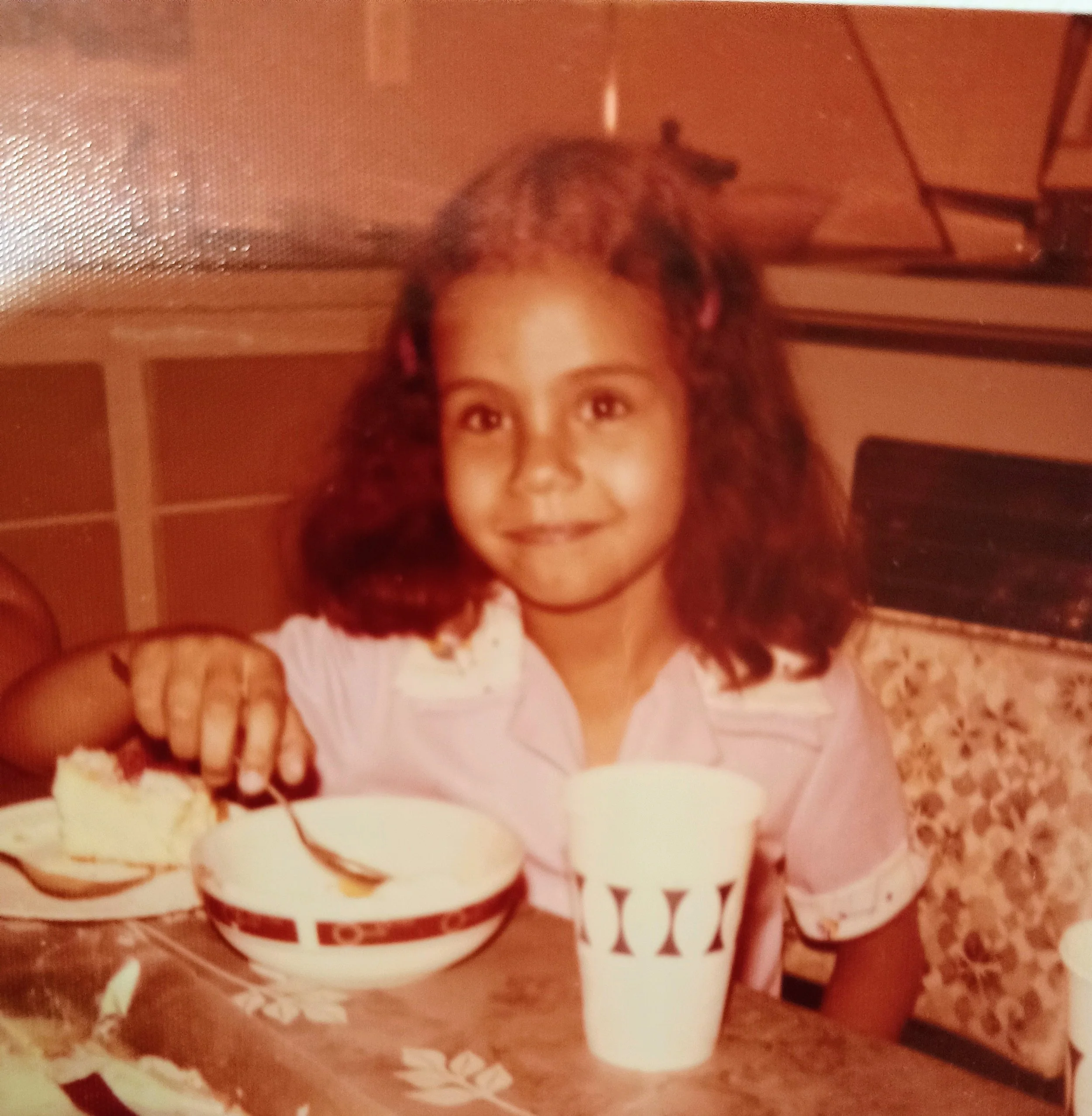
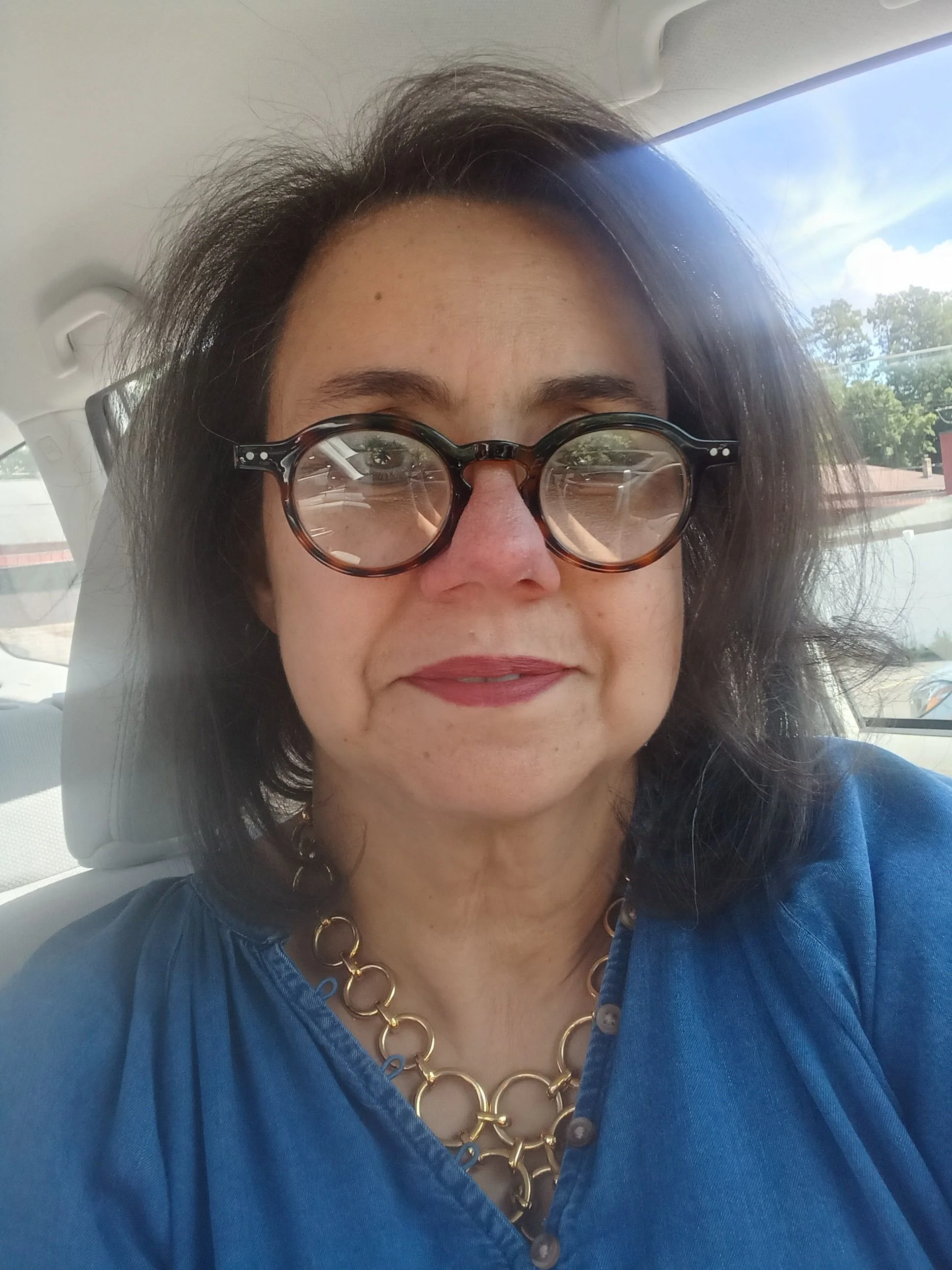
Mona Norfleet
Mona is a Human Services student, equity advocate, and Membership Director at her local YMCA, where she cultivates belonging and connection across generations and cultures. With a background in community engagement and inclusive program development, she brings a trauma-informed lens to her work—centering dignity, cultural humility, and lived experience. Mona has led local initiatives focused on racial equity and currently serves as vice chair of a philanthropic trust that supports access and opportunity. Her passion lies in supporting marginalized communities and building systems that reflect justice and care. She’s also the proud mother of an adult daughter who is Black, Italian, Puerto Rican, and was raised in a Muslim home—“but that story’s for another podcast,” she says with just the right amount of sass. Whether mentoring staff, shaping policy, or showing up for her neighbors, Mona leads with compassion, curiosity, and a commitment to transformative change.
About Our Hosts


Shamm Petros, Senior Director of Learning & Development at Lion’s Story, brings training grounded in the organization’s 35+ years of racial literacy research and a story-forward approach to racial healing.
Dwight Dunston, a mindfulness practitioner and storyteller, provides the emotional grounding and reflective prompts that model racial stress processing through the body.
Full Episode Transcript
Shamm Petros (00:00)
Welcome to Stories That Stay, how stories of identity shape us. This is a podcast where healing happens at the intersection of art, science, and storytelling. I’m Shamm Petros, a therapist, learning strategist, former refugee, and reluctant creative.
Dwight Dunston (00:19)
And I’m Dwight Dunston, a facilitator, educator, artist, and proud uncle. Stories That Stay is a project of Lion’s Story.
Shamm Petros (00:28)
Together at Lion’s Story, Dwight and I have spent the last five years training thousands of people to confront identity-based stress and transform their stories into tools for healing and change.
So as we arrive with today’s guest and her stories, let’s prepare ourselves for the feelings, emotions, truths that will emerge. We want to take a moment to settle in together. Wherever you are—walking, driving, resting, moving—we invite you to take a few breaths just for you. And continue to inhale and exhale for the next 45 seconds.
Listeners, remember to keep breathing. That’s the point of what we’re doing here, right? To keep breathing and feel it. All right, I’m going to hand it over to Dwight.
Dwight Dunston (01:59)
Our guest today is Mona Norfleet. Mona is a human services student, equity advocate, and membership director at her local YMCA, where she cultivates belonging and connection across generations and cultures. With a background in community engagement and inclusive program development, she brings a trauma-informed lens to her work, centering dignity, cultural humility, and lived experience. Mona has led local initiatives focused on racial equity and currently serves as vice chair of a philanthropic trust that supports access and opportunity. She’s also a proud mother of an adult daughter who is Black, Italian, Puerto Rican, and was raised in a Muslim home.
Shamm Petros (02:49)
How are you both? I’m grateful.
Dwight Dunston (02:53)
I’m grateful. We’re grateful.
Mona Norfleet (02:55)
Yeah, you know, it’s something I practice daily—gratitude. Definitely feeling that this morning. Thank you guys for having me.
✦✦✦
03:03 — Meet Mona Norfleet: A Journey of Identity
✦✦✦
Shamm Petros (03:03)
How are you arriving today? Some gratitude—what else are you bringing?
Mona Norfleet (03:07)
I’m a little nervous, just the process. That’s par for the course, I think. But I feel good. I feel very good. I feel good in life. I feel good where I am. And I just feel good this morning. So just happy to be here.
Shamm Petros (03:20)
Amazing. And you’ll see that we’ll ask you this question in the beginning and the end. That nervousness—you said a little nervous, right? If I put you on a scale of one to ten, where would you place yourself?
Mona Norfleet (03:33)
Three. Three. Not too bad. Chill.
Shamm Petros (03:36)
Right, we love it. We love your ability to articulate it. Thank you. And thank you for sharing. I’ll pass it over to dear friend, co-host Dwight, to take us through the next part of our time together and processing your story.
Mona Norfleet (03:47)
Sounds good. Thank you.
Dwight Dunston (03:49)
And Mona, we have to shout out you and our wonderful producer, Peterson Toscano—who you are related to, you know—so we’re just honored to have our guest and our producer being the same family unit. Acknowledging that here at the top end, holding that nervousness at a three. And, you know, as Shamm has invited us and our guest, as we ask you this first prompt, if at any point you feel the need to settle back into breath, take your time. Mona and our listeners—feel free to do that.
We always ask our guests the same initial question. After that, we’ll have some follow-up questions, but we want to start with you, Mona, just inviting you to share your response to this question:
What are your earliest memories of difference that you recall?
✦✦✦
06:10 — Early Memories of Difference
✦✦✦
Mona Norfleet (04:44)
Okay, so I had a few things that came up for me, but really two distinct memories that stood out. The first one was—I remember playing patty-cake with my dad and looking at his hands. And it was a rare moment back when I was a child, a rare moment for any of us to have any quality time with my dad since he worked so much.
I remember his palms were kind of pinkish, and they had brown lines in the creases. And I was fascinated, since my palms were pink and the flip sides were beige and olive-colored like my mom’s. Olive skin that got darker in the sun and showed lines where the sun didn’t get to, and skin that got golden after a day of playing outside with my brothers and sisters.
No, my skin color was not the rich, smooth brown of my father’s. His was the color of sweet chocolate milk and mahogany wood and my parents’ coffee in the morning with cream. His skin seemed so warm and pleasing, like a hug.
This is a little difficult to recall only because he died when I was eight. Thinking of him is difficult, but it’s also really lovely to have that memory of his hands and how different they were from mine, and just the loving feelings that go into that memory.
✦✦✦
09:07 — The Impact of Racial Identity in School
✦✦✦
Mona Norfleet (04:44) (continued)
But the second memory was a little bit more intense in that I was in seventh grade in a brand-new school for me. And the differences were like night and day—they were stark.
The school was so different than what I was used to. My previous school was made up of mostly Black students, with a few mixed-race kids, and two—that was it—two white kids. Two white boys. And that school was in the inner city of Hartford, Connecticut, and it was poor. I attended until I think I was in sixth grade.
But my new school, Watkinson, was also in Hartford city limits—but that’s where the similarities ended. Watkinson had three buildings, as opposed to one unfriendly, institutional-looking building that I was used to. Watkinson had a large converted Victorian home, a building of classrooms with a gymnasium, and a very small A-frame library.
I remember that the grounds were immaculate thanks to a full-time groundskeeper. I also remember that the groundskeeper had one of those very skinny gray dogs. It wasn’t a greyhound. I think it was a Weimaraner—a Weimaraner. I’m not saying it correctly, but yeah. I’d never seen a dog like that before, but it was pretty wild.
The other differences were like—many of the students’ parents drove their kids into school and didn’t have to take the city bus like I did. And instead of frozen lunch that was re-warmed and tasteless like I had at my old school, this school had a chef. And he introduced us to things like French cheese, which was pretty cool. This wasn’t the yellow brick of cheese that you’d get—like the government cheese. This was good stuff.
Some of the students were Jewish, and they had different customs and holidays, which were also really foreign to me. It was at the time where bar mitzvahs and bat mitzvahs were taking place as their rite of passage.
The rest of the students all seemed to have straight hair with blonde highlights and seemed to be thin and graceful. My multicultural hair was wiry and curly and dark and never stayed in place. My body was fuller and rounder, and it felt ungainly compared to theirs.
One of the biggest surprises occurred one day at recess. I remember this pretty clearly. I was chasing this boy that I had a crush on through one of the buildings. I chased him up a stairwell, and I stood on the bottom floor to look up at his face—his handsome face—because he was so cute. I just remember looking up and seeing his light brown feathered hair and his blue eyes looking down through the stairwell at me.
I remember he had ski-lift tickets hanging from the zipper of his Rossignol ski jacket. I remember all of this.
Mona Norfleet (09:07)
He was wearing a light blue button-down shirt and a beige knit tie. He was in our school dress code—we had a dress code at the time. But he looked so good, and I was so smitten. I had stars in my eyes, had butterflies in my stomach—you know, all the regular stuff.
I started to walk off the stairs really slowly. But then I stopped myself. I was thinking, Wait… something’s wrong with this picture. Why am I chasing him? He should be chasing me. So when I had that thought, I stopped and I started to turn away.
And right at that moment, when I turned away and started to walk down the stairs, he yelled:
“Yo, N-word—where are you going?”
And in that moment, it all came crashing down on me—like someone slapped me in my face. I had every indication that I was different, but at that moment I understood just how different and why.
Instantly, I felt really angry. I was furious at the boy, but I was furious at the boy and the school—angry with the girls with the perfect hair, and the chef with the French cheese, and the groundskeeper, and the A-frame—all of it.
But most of all, I was hurt. And I hated myself. It was like the first time I really felt embarrassed or ashamed of that Blackness.
So as intense as that was, it’s one of those memories where I really recall just being very different from the people around me.
Shamm Petros (10:56)
Mm-hmm.
Dwight Dunston (10:58)
Thank you for sharing, Mona.
Mona Norfleet (11:00)
Yes.
✦✦✦
12:00 — Processing Emotions and Memories
✦✦✦
Dwight Dunston (11:01)
A lot of richness, a lot of vividness, a lot of details—but also heartbreak, right? Anger. Rage. Disconnection. Othering. Hate.
Mona, in our work, it’s rooted in storytelling and in some specific tools and strategies to really gain more awareness and meaning and understanding of our stories and the potential stress they hold.
So I’m going to ask a series of questions. Shamm and I are going to ask a series of questions in a particular way. And it’s not to avoid going into some of the other details—we’ll make space for that. But just—if it feels strange for you or our listeners as you’re listening, if it feels strange that we’re asking these in this way—there’s 30 years of research behind this practice.
So—yes—really powerful stories, both of those.
As you reflect on the experience of now having shared them, or maybe a moment as you were sharing them…
You might have noticed feelings coming up. Any feelings or emotions around the stories that you shared?
Mona Norfleet (12:14)
Yes. I feel like I was back there in that moment feeling angry. I can feel my anxiety lifting. That cool sense that I had before—it got washed away just in recalling that particular time. Just missing my dad and also having that really terrible memory for a young woman, young person to have. It resonates at a higher frequency that’s not so great.
I appreciate it. I honor it. It’s there. It’s something I’ve had a chance to think about a lot over the years and work on.
✦✦✦
14:47 — The Role of Family and Support
✦✦✦
Dwight Dunston (12:51)
Mm-hmm. I heard anger. Is it fair to say that sadness and appreciation also were the feelings? Any other emotions, just in the retelling?
Mona Norfleet (13:07)
I’ll tell you what I’m not feeling. Like, I don’t feel remorse. I don’t feel embarrassed about telling this story or anything of that nature. I feel—I guess I feel fairly, for lack of a better word—proud. So yeah.
Dwight Dunston (13:20)
Mm-hmm.
Yeah. Yeah. And so—good to notice the feelings you do feel and don’t feel, right? That awareness is—in our world—we say is a skill.
So you have anger, sadness, appreciation, and you feel proud. If you have to scale those on a scale from one to ten—one being like, it’s a little bit there, it just nudges me a little bit, to ten being overwhelming, all-consuming, in every part of my being right now—where would you scale one or all of those feelings?
Mona Norfleet (13:56)
Let’s say an eight. Yeah—eight or nine. That’s how I feel right now.
Dwight Dunston (14:02)
And all for those—anger, sadness, appreciation, pride?
Mona Norfleet (14:06)
The more intense feelings—the anger, sad—those things I feel pretty strongly, up there on the scale. And I think the appreciation, just in the nature of that, and the pride, feels lower—just there for sure, stronger than normal. But these other feelings of the anger and the hatred, those things I feel intensely right now. They’ll go away, but you guys will help me too.
Dwight Dunston (14:31)
Yeah, that’s one of our hopes. We don’t make any promises of how the feeling will move, but we’ll certainly be with you in it and bring some awareness to it.
I’m going to ask you to locate where these feelings—somatically, physiologically—are showing up.
Mona Norfleet (14:47)
So these feelings definitely are showing up right here in my chest. I know you can’t—the listeners can’t see it—but yeah, right in the deep part.
And I also have learned through the years that just locating it somatically in and of itself has been helpful to me, but then also to place a hand in that area where I feel the tightness has been really functional and good for me because it helps to soothe me. Helps me know that I’m present and here with you guys, and I’m not that 12-year-old girl anymore. So that’s really where I feel it.
Dwight Dunston (15:19)
I’m just curious if the gratitude—if the pride—are also in that same space too, or if you notice them anywhere else in your body.
Mona Norfleet (15:29)
I’m familiar with the uncomfortable feelings coming to the chest area, but I don’t know where the pride and appreciation—where that settles in me. That’s a good question. I don’t know the answer to that.
Dwight Dunston (15:45)
Yeah. Yep. And good to just notice the “I don’t know” too, right?
The last question I’ll ask in this more formal way—and you’re doing such a beautiful job of noticing and being aware and bringing us into your experience of your stories, thank you—but the last question I’ll ask, and then invite Shamm in to do some further processing, is:
Often in our stories, we want to make a little bit more space—because you’ve done this in many ways already. But we invite our folks as they’re practicing these skills, building awareness around their stories, to just name any other images that come to mind as you tell the story, or any self-talk—things that you were telling yourself either in the present moment or back when these experiences happened.
Any images or self-talk coming to mind?
Mona Norfleet (16:41)
Sure, sure. So in the first story, my thought—or the images that came up when I was thinking about my dad—is ironic, because he was not a touchy-feely guy. This was the seventies. He was a Black man from the South. He was very stern.
But the image that came up for me was being able to cuddle in his arms. He was kind of imposing, and I was little—so it was nice to be able to get on in there. That is the image that arises when I talk about the hands.
The image that comes to mind when I’m talking about the young man is just—how I just knew I had it going on. I thought I was it, and I was chasing, and he was so… you know. So the self-talk there was at first very positive, because I was thinking, I got this. But that quickly changed when he said what he said. And me thinking the absolute opposite, like, Damn, I don’t have this. And he’s thinking of me in this other way.
And so the self-talk changed quite a bit—to saying, Get out of there. Just save yourself while you still can.
Shamm Petros (17:51)
Hmm.
Dwight Dunston (17:51)
Mm-hmm. Thank you for that sharing. I want to bring Shamm in to do some further processing. But for you, Mona—and for our listeners—remember, any time you need to take a breath as you’re sharing or listening, please do so.
Mona Norfleet (18:06)
Will do. Thank you.
✦✦✦
18:06 — Revisiting the Past: What Could Have Been
✦✦✦
Shamm Petros (18:08)
I took a few breaths, and I was also placing my hand on my chest as you shared and as I felt. And I hope others can do the same—wherever they need it. Maybe it’s their belly or their hands.
I had to close my eyes even at points when you shared, Mona. It was so vivid. And the self-talk too—prominent. Wait, something’s wrong with this image. He should be chasing me. And then the stark reality that followed.
I’m wondering—as illuminating as the story is, all the details—what happened after? Because it feels like it was just the two of you in the staircase, right? Was there a witness? What happened after this experience for you? What was your reaction or response?
Mona Norfleet (19:00)
So my response was—I mean, I was nonplussed. Obviously I’d heard that word before. I knew precisely what it was, but it had never been directed at me. So I walked away feeling like I did—like I said, angry, etc.
But you know what? I didn’t have the wherewithal to tell anybody. I had never told anyone. I did not feel like anyone around me—considering where I was—could understand. So I instantly felt like… excuse me… I instantly felt alone.
I remember walking back to my locker and just being sort of quiet.
Shamm Petros (19:50)
Mm.
Mona Norfleet (19:52)
Not wanting to talk to people—which was so starkly different from how I was.
Shamm Petros (19:58)
Is there another feeling associated with that, apart from the feelings you described earlier? The anger, the appreciation, the sadness? Or does this impact the range or the scale of those feelings?
Mona Norfleet (20:16)
It was the first time I think I felt shame about being Black. And that was so unusual for me. I’d had a real sense of pride about who I was. My parents always tried to say we got the best of both worlds. And I always grew up to feel proud about it.
And this time I felt definitely not proud. I felt shame. And fear, even. Those things came up for me for sure.
Shamm Petros (20:51)
Mm-hmm. Can you scale those? On a one to ten?
Mona Norfleet (20:59)
Definitely like a nine or a ten, for sure. They were intense for me as a young person. I felt it intensely.
✦✦✦
20:59 — The Healing Power of Storytelling
✦✦✦
Shamm Petros (21:12)
And there’s another question we pose after this story—related, if you will. In the retelling of the story—taking into context all these emotions, where you felt them in your body, the vividness of the image—I’m also now hearing the protective element you came in with, right? The pride your family gave you.
Because you noticed difference in your first story. You noticed difference, but with pride, and curiosity, and wonder. But at this stage—and this was seventh grade, so you’re about 12 or so—the shame emerges about your race. You didn’t tell anyone right after. You said you didn’t have a direct response. You went to your locker, you were alone, and you chose not to share with others.
Mona Norfleet (21:50)
Seventh grade, so I was like 12 or so. I didn’t have the language. I didn’t know how.
Shamm Petros (22:10)
Now—in this world, in the retelling of the story—we are all kind of time travelers. You’re in that space. And this is an imaginary world where anything is possible, right? And this is your reality. If you could go back there and redo that experience in any way, what would you do differently?
And I’ll say also—you could bring in folks. You could bring in different elements. Open up the opportunities, even for 12-year-old you, to do whatever the heck she needed to do.
Mona Norfleet (22:41)
That’s a great question.
Well, I think what would be different—or how I would change it—or what I’d do now…
I don’t know that I’d chase him in the first place and have put myself in that position.
But if I did do that, I think I would have definitely talked to somebody afterward, just knowing that it was as impactful as it was.
You know, we all had academic advisors—each student. And they served the role of sounding boards for us. They weren’t counselors or anything—they were just our teachers, etc. But they had the ability to listen to us and just hear us out. And I know we had that in place.
And I think I definitely would have utilized that person in this instance, because it was so devastating. I know that would have helped me probably get through my day and get back up to my bubbly self—instead of feeling so downtrodden.
Shamm Petros (23:36)
Mm-hmm.
Mona Norfleet (23:40)
And I think that person would have probably told me… I don’t know what that person would have told me. It’s hard to say.
But I know they would have reinforced that I still am beautiful, and kind, and wonderful, and bubbly—no matter what.
That’s what’s key and important here—this alchemy that comes from a mixed-race marriage and kids.
✦✦✦
23:56 — Reflections on Identity and Belonging
✦✦✦
Shamm Petros (24:05)
So if you could redo this moment, you would have sought a caregiver—whatever they look like—for someone to remind you of that. Someone in the building.
And I want to say—from the hundreds, probably thousands, of stories we hear—when folks, particularly people of color, share their first memories around difference or racial difference, it likely happens in a school setting.
I can’t tell you—I wish I could quantify it honestly. And it’s quite young. People of color experiencing their memories at age four, five, six. And we work a lot with academic settings. There are so many actors, so many ecosystems merging with one another. So much socialization going on.
So this redo of yours—it’s so appropriate. It’s, to some degree, the most basic thing. You’re even saying, “I know they’re not going to be the best, I know they’re just going to be a sounding board…”
But here’s a pattern in your self-talk, if I can offer an observation:
You said, “I don’t know what I would want. I don’t know what I would want them to say.”
But somebody should have said:
“I am still kind, beautiful, and bubbly.”
That is wonderful to know—that that’s how you saw yourself, and that’s how you wanted folks to see you.
Mona Norfleet (25:23)
Yeah, for sure. Thank you.
Shamm Petros (25:26)
You know this story—so many stories. And when we do this work, people work on their story over and over and over again. Dr. Stevenson, who leads this research, has probably told his first story over and over.
Each time—and even with our trainers or participants—the skills we took you through today, those skills, we call that C-L-C-B-E:
Calculate
Locate
Communicate
Breathe
Exhale
Calculate your emotions—all of them. Name all of them. Put them on a scale so you can engage with them. Locate them in your body. Communicate the images. Communicate the language you hear—self-talk. And breathe.
Calculate, locate, communicate, breathe, and exhale.
We always say: practice, practice, practice. There’s no perfect here. There are no experts here. What we hope is that you have a skill set so every time you share, there’s a skill that allows you to take care of yourself. Truly take care of yourself. Which sometimes means you’re not joyous—but you’re honoring the full colors.
I used to tell folks: your therapist doesn’t promise you’ll leave the session smiling. But maybe—as we said earlier—how these emotions move, you can move them too. With breath. And you have these skills—from the tapping to the locating and even the reimagining.
And you’re a writer, right? I would even task you to journal the different scenarios. What do you really want someone to say? That redo? Beautiful.
Dwight Dunston (27:05)
I’m like—right—maybe he would have done something different. But I’m like—what would Black Dad have done if he came up there? What would my white mom have done if she came up there? You said you’ve got siblings—what would they have done when they came up? You know what I mean? I’m just like…
Mona Norfleet (27:17)
God, hysterical. Let me tell you—I can hear it in my head. Because my mom—this was even more stark of a difference between my parents—is that my mom was from the Bronx and had a Bronx accent. My dad was from Alabama and had a Southern accent.
So I can hear my mother just going off on this kid. Or my dad—who wouldn’t say too much—but I could just feel the energy from what he would have said. My mom? Yeah, that would have been terrible for him. He would’ve been in trouble.
Shamm Petros (27:47)
I would have loved to know what your mom would have said.
Mona Norfleet (27:50)
I could tell you—she’d be like, “How are you—what are you thinking? What are you thinking, kid? She’s just a little girl!” Just like—what…?
I could just hear her. She’s just—yeah. And my dad—yeah, he wouldn’t have had it one bit. “Damn this shit.” I can see him—“Come on over here.” I could see him wanting to handle him. Yeah.
✦✦✦
27:05 — Closing Thoughts and Future Steps
✦✦✦
Dwight Dunston (28:12)
Yeah. Just thinking about that—and I don’t know if you noticed—you had this smile. What’s the emotion right now, as you think about your parents stepping in?
Mona Norfleet (28:21)
I feel like—so relieved. Relieved. Yeah—relieved. And I just… it’s funny, because yeah, there would have been a little bit of embarrassment, but just like—Yeah, tell that boy!
Uh-huh. Get him.
Dwight Dunston (28:32)
Uh-huh. Relief. Okay. Scale that relief. Scale that relief.
Mona Norfleet (28:37)
That—you know—feels so good. It feels… like a ten. Like, just to be there to take care of me and protect me and say to this kid, like, “You have problems, and I want to talk to your parents,” and however else they would have handled it as a parent.
I felt—you know, like I said, when I walked away, I felt so alone. But the thought of having my parents there for me—especially since they’ve been gone for so long…
My dad, like I said, he died when I was eight.
Just the thought of having him there and taking care of me—
It makes me feel good.
That’s a wonderful thing that you brought out. That’s cool.
Dwight Dunston (29:13)
You’re smiling—but if you had to locate it—that relief—
Mona Norfleet (29:19)
I do not feel the tightness in my chest anymore—just at the thought of having my parents there for me and sticking up for me. I don’t feel that same intensity. Yeah, it’s amazing. It just sort of dissolved. Just thinking about them being there as a unit for me—the different ways they would have handled it. But together—as a united front for me.
It’s been a very, very long time since I’ve had that, just because Dad’s been gone so long. And actually, my mom died twenty-some odd years ago too. So there’s a missing of that there. And just thinking of them together, showing up for me—it’s a lovely thing. Thank you for that.
Shamm Petros (30:06)
Thank you.
Dwight Dunston (30:07)
Thank you for sharing them with us and with our listeners. Maybe as you’re listening, you might think of an early moment in your own lives, right? And who are some of those grown-ups—those folks that you know love you, who have instilled in you a love for yourself and who you are? Bring them back with you in these moments. What would that feel like? Just notice what it would be like to bring these loved ones—these caregivers—back with you.
Mona Norfleet (30:36)
That’s powerful for me. Thank you. I don’t cry—I’m not a crier—but I feel like I could, you know, right now. That was a gift. Thank you.
Shamm Petros (30:48)
Thank you, Mona. And you know, the gift—you can carry it out of here, right? This is how adults play. So maybe it’s calling someone in your life and recounting, as you did—“My mama would’ve said this,” or “My papa would’ve done that.” What’s in your practice? To journal? To leave a voice note? Or maybe just sitting down and imagining it and laughing to yourself and crying in your favorite corner of the home.
The power of imagining what could have happened and bringing folks into that space—you always have that. You can take that with you. See how the feelings change. Your body—
You said “dissolved.”
So I’m like, Where in your body did it dissolve?
There’s this constant noticing and resharing you can do with yourself. Thank you. It’s a gift on many levels.
We want to ask a couple of questions we ask all our guests, just to close out. One you know already: What’s your stress level now, after sharing the story?
Mona Norfleet (32:06)
My stress level—I guess now that I recalled my parents—I guess it’s much more diminished. So I’d say it’s back down to about a two. Yeah.
That’s significant for me. This scaling thing—I’m not unfamiliar with it. I’ve worked with my own therapist. She has done that for me before. But I’d have to say—even with the tapping and those kinds of things—that this significant of a change is unusual for me.
I have to thank you guys for that. That’s nice.
Shamm Petros (32:36)
Thank you. And the toolkit—it’s the toolbelt, or you know, magic purse, whatever you want to call it. Maybe it’s all of these things as you need them. You see something that reminds you of a memory that was upsetting and you’re like, “I’m pissed at it. Twelve.” You know? It’s a quick care. It’s yours to play with.
Honestly, I do like the word play for us a lot—to regulate and calibrate, right? Sometimes these moments, these memories, these encounters feel insurmountable. Can we look at them as pieces?
Mona Norfleet (33:08)
Right.
Shamm Petros (33:10)
For this memory, if you could give this story a title, what would it be for you?
Mona Norfleet (33:16)
Oh, that’s a good one. I’m not so good with titles. I mean, I can write, but the titles are so hard for me. Let’s see…
Shamm Petros (33:24)
Hashtag. Haiku.
Mona Norfleet (33:27)
I guess it would be more like Teenage Angst and First Memories of Difference, something along that line.
Dwight Dunston (33:34)
Mm-hmm.
Shamm Petros (33:35)
Yeah.
Mona Norfleet (33:37)
When you talked about calling upon your parents or what have you—I do ask my ancestors to follow me and help me throughout my day. But you know, our ancestors can seem so distant, thinking about who they are. But when I think about my parents and ask them to help me, that’s much more impactful.
Thank you guys for that.
Shamm Petros (33:58)
Feels tangible.
Mona Norfleet (33:59)
Yeah. Definitely. Yeah. A lot closer. Thank you.
Shamm Petros (34:02)
You know, if you write—don’t hold back anything. You don’t gotta show anybody. All right? You can do whatever you want in that world, okay? And then even dispose of it as you wish. Don’t limit your own reimagining or your own healing.
Thank you, Mona.
Mona Norfleet (34:10)
That’s right. That’s right.
Dwight Dunston (34:23)
Thank you, Mona. Thank you so much for your courageous, generous storytelling and for allowing us and our listeners to walk alongside you in those experiences and sharing them with us—sharing family with us.
My dad passed away 12 years ago. And so I did pass some experiences—but things have continued to happen—and just your modeling, thinking through what it would be like to have these figures who love you dearly in these moments—is something, even though I practice this work all the time, I can’t always remember. But your modeling helped me to remember that that’s available to me as well.
So thank you so much.
Mona Norfleet (35:05)
No problem. It’s my pleasure. Absolutely.
Dwight Dunston (35:08)
And for our listeners, we want to close out with one more breath together. Wherever you are, we just ask you to inhale…
Exhale…
And continue to do so as many times as you need.
We know this work is emotional. And for us—that’s the point.
We want to use that data—the data of our emotions, our physical reactions—to help us craft and continue to evolve our stories.
Shamm Petros (35:59)
Thank you so much for tuning in to Stories That Stay, how stories of identity shape us. This podcast is a project of Lion’s Story. To learn more about Lion’s Story and our work, visit lionsstory.org.
This episode was produced and edited by Peterson Toscano. Music during our mindful moment comes from Dwight Dunston.
For our listeners—know that we are here to help you build the real courage, practical language, and skills to navigate discomfort and distress with clarity and compassion, starting with yourself.
If you found value in today’s episode, please consider leaving a review, subscribing, or sharing this with someone who needs it. Your support helps us grow our healing community with practical learning resources and training opportunities for individuals and communities who need these tools and skills.
Dwight Dunston (36:59)
So until next time—keep listening, keep learning, and keep telling your story. And remember—please remember—that you are your most important listener.
Learn More & Resources
Visit Lion’s Story to explore our mission, training programs, and upcoming events like the
Resilience Literacy Institute.
Stories That Stay is a project of Lion’s Story, a nonprofit dedicated to building racial literacy through storytelling, mindfulness, and healing.
Rooted in over 35 years of research by Dr. Howard C. Stevenson at the University of Pennsylvania, our work guides individuals and institutions to reclaim their stories, reduce identity-based stress, and step into authentic inclusion—not as a checklist, but as a way of being.
Produced and edited by Peterson Toscano.
Mindful moment music by Dwight Dunston.
Music by Epidemic Sound.
Podcast site: storiesthatstay.net
Hosts: Shamm Petros and Dwight Dunston